Why Rent Control Works
Neoliberals are wrong: rent control protects tenants, is good for the housing market, promotes lively cities, and reduces one of the biggest sources of rising inequality today. We need to expand it dramatically.
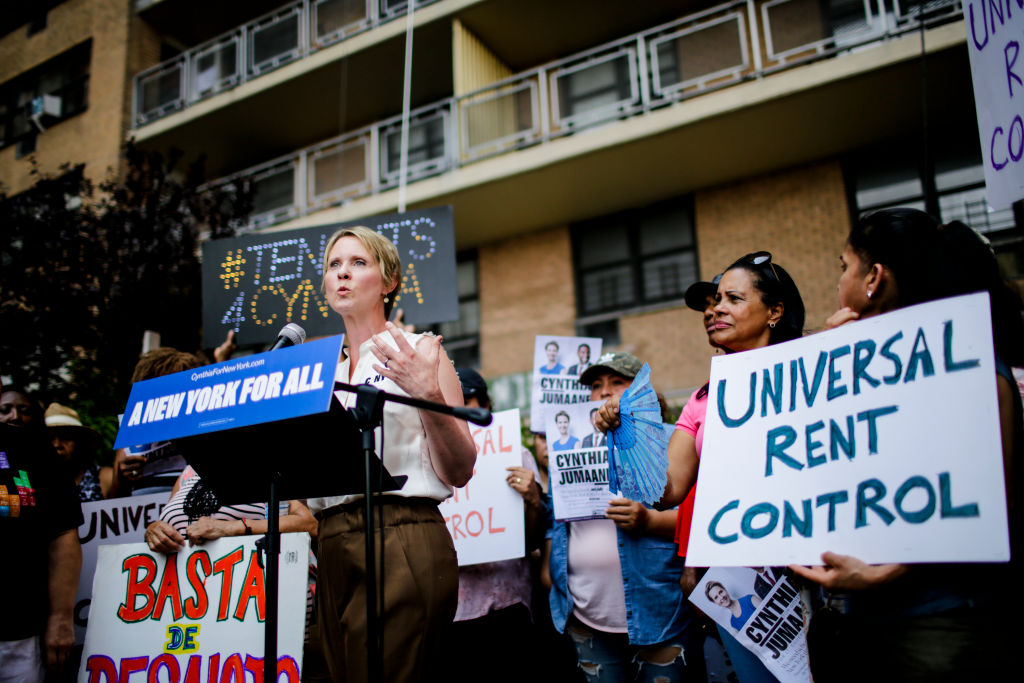
Democratic gubernatorial candidate Cynthia Nixon speaks to attendees during a rally for universal rent control on August 16, 2018 in New York City.Eduardo Munoz Alvarez / Getty
Among economists, rent regulation seems be in similar situation as the minimum wage was twenty years ago. At that time, most economists took it for granted that raising the minimum wage would reduce employment. Textbooks said that it was simple supply and demand — if you raise the price of something, people will buy less of it. But as more state and local governments raised minimum wages, it turned out to be very hard to find any negative effect on employment. This was confirmed by more and more careful empirical studies. Today, it is clear that minimum wages do not reduce employment. And as economists have worked to understand why not, this has improved our theories of the labor market.
Rent regulation may be going through a similar evolution today. You may still see textbooks saying that as a price control, rent regulation will reduce the supply of housing. But as the share of Americans renting their homes has increased, more and more jurisdictions are considering or implementing rent regulation. This has brought new attention from economists, and as with the minimum wage, we are finding that the simple supply-and-demand story doesn’t capture what happens in the real world.
As of 2019, there are approximately 200 cities in the United States with some type of rent regulation. Most of them are in three states — New York, New Jersey, and California. Other areas where rent control was once widespread, such as Massachusetts, have seen it eliminated by state law.