Workers and Renters of the World, Unite!
Although unions seek higher wages from employers, much of that extra pay goes straight to the landlords. To build workers’ power, we need decommodified and democratically controlled land and housing.
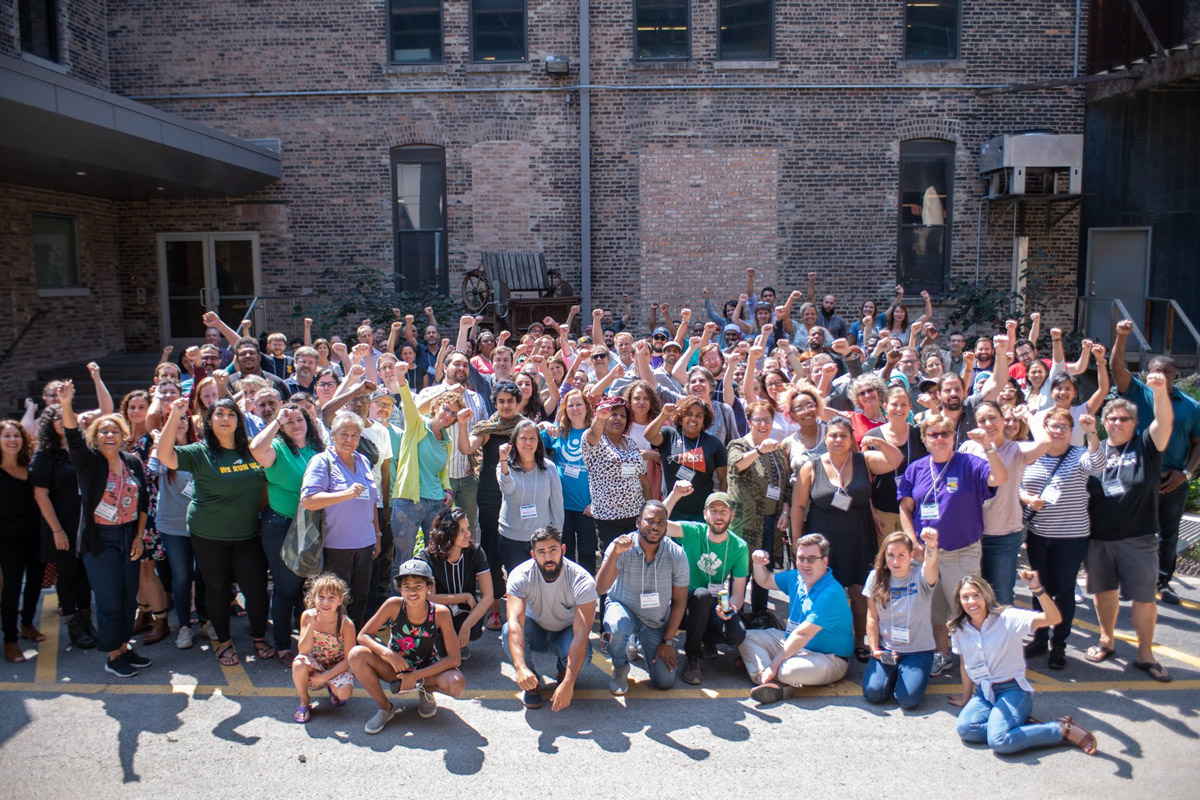
Bargaining for the Common Good’s Housing Justice group pose outside SEIU in Chicago, IL. (Facebook)
Labor has always had a stake in housing. Most evident are the building and trade jobs that come with construction. Union labor built public housing beginning in the 1930s, and over the last several decades, union labor tore much of it down. But New Deal public housing, as well as wartime rent controls and workforce housing production, ultimately grew out of labor’s demands for affordable, healthy communities — not a demand for “job growth.” And for some early worker groups, like New York City’s needle trade–based United Workers Association, the project of shaping the city was tied to a vision of social solidarity, through everything from housing cooperatives and grocery cooperatives to transportation pools.
Today, few union campaigns consider housing beyond job opportunities or wage and cost-of-living calculations. Whether in construction, trades, or security, unions seem to routinely go along with the bosses as they pursue the capital investments that drive gentrification. Likewise, union pension funds, like all pension funds, finance real estate investments that make the city unaffordable to vast numbers of those unions’ own members.
Labor, led by the workers of frontline communities, must envision a just transition away from gentrification — and that requires affordable, fossil-fuel independent, retrofitted housing, and decommodified land.