This Tuesday, the Political Revolution Comes to Philadelphia
If they win tomorrow, two independent left candidates could fundamentally realign Philadelphia politics.
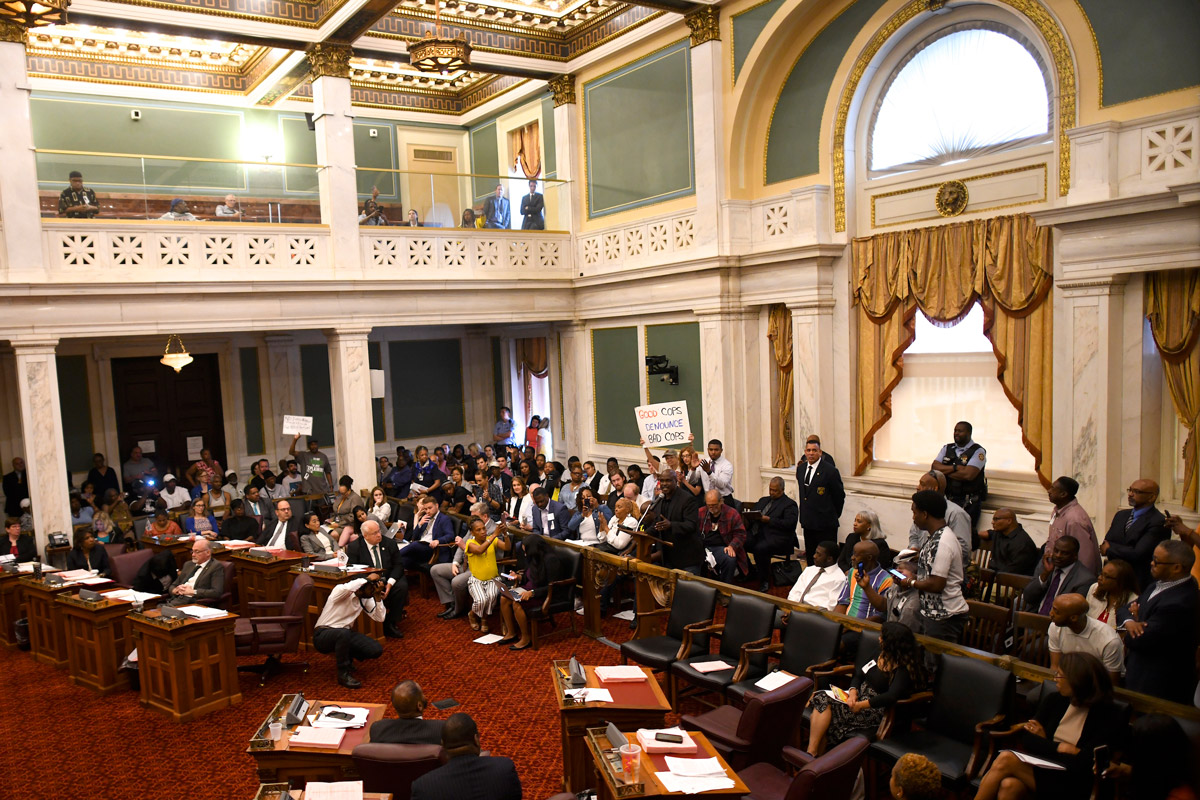
Demonstrators gather in the council chamber to protest at Philadelphia City Hall on June 20, 2019 in Philadelphia, Pennsylvania. (Mark Makela / Getty Images)
Tomorrow, a pair of underdog campaigns in Philadelphia are looking to pull off what would be one of the most significant third-party victories in generations. Local activists Kendra Brooks and Nicolas O’Rourke are running on an independent Working Families Party (WFP) ticket for two at-large city council seats, with a platform that centers the interests of Philadelphia’s most neglected residents.
Philadelphia — like Bridgeport and Hartford, CT, where the WFP has also spearheaded campaigns — has laws that prevent a single political party from controlling every seat on its city council. It has ten positions that are elected on a district basis (nine are represented by Democrats; one, in northeast Philadelphia, has been represented by a Republican since 1980). It also has seven seats that are elected at-large. Each party is only permitted to nominate five candidates for the general election, ensuring that two seats go to candidates from other parties. Since Democrats often win over 80 percent of the vote citywide, the five Democratic nominees easily come in first through fifth place in the general election. Republicans have won the two remaining seats ever since this electoral system was established in the 1950s, though in recent elections their best performers have received less than a quarter of the votes of the worst-performing Democrats.
The result is to give Republicans significant representation on the city council. Far from threatening Democrats’ stranglehold, the city council governing majority is effectively an alliance of pro-corporate Democrats and Republicans. That alliance deflects popular demands around affordable housing, school funding, and other basic public goods.