Neoliberalism? Never Heard of It
The latest liberal parlor game is pretending there’s no such thing as neoliberalism. The game’s very popularity highlights neoliberalism’s enduring hegemony.
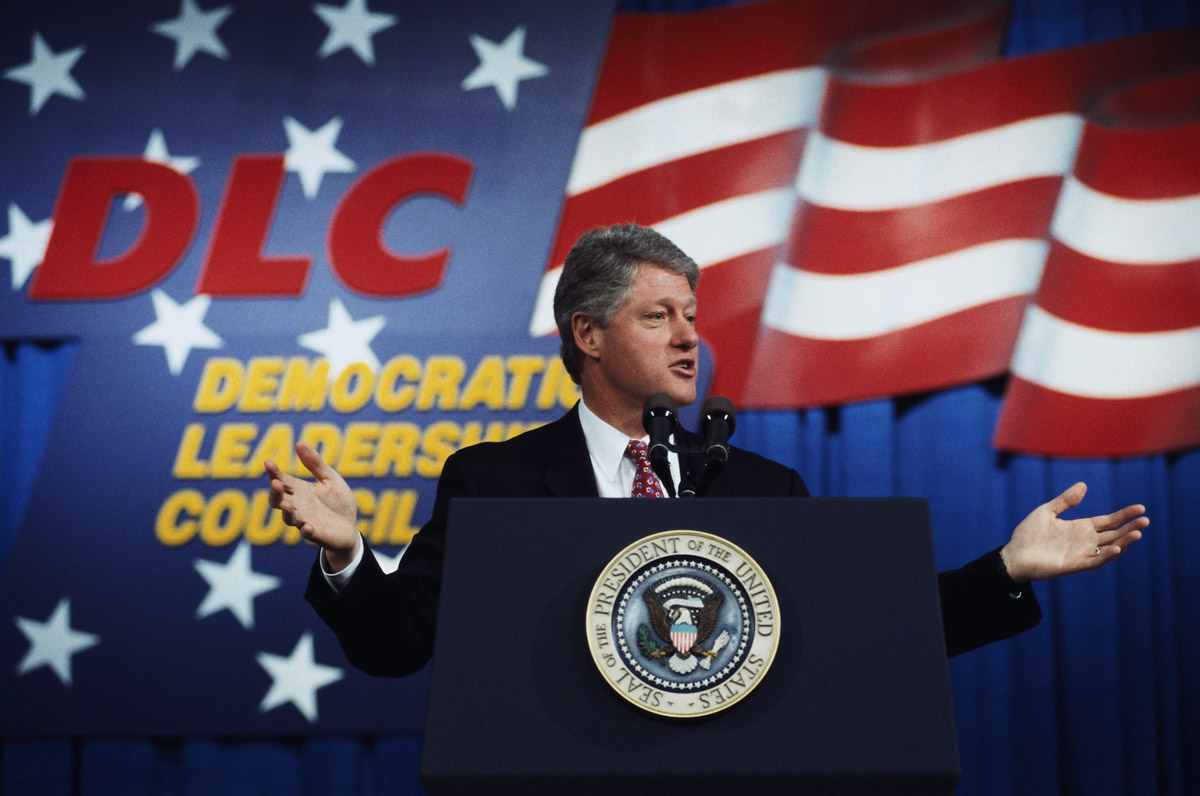
Bill Clinton speaks to the Democratic Leadership Council on December 3, 1993. (Wally McNamee / Getty Images)
For the first time in decades, it has become possible to envision real alternatives to the prevailing political and economic order of the past forty years. In both Europe and the Americas, the neoliberal consensus is facing a crisis of moral, intellectual, and popular legitimacy: proving unable to deliver either the growth or the broad prosperity its ideologues once promised and facing robust electoral challenges from both the socialist left and the nationalist right.
Predictably enough, this turn of events has elicited a defensive response from neoliberalism’s greatest partisans and those otherwise invested in its political and cultural hegemony. “Reminder: Liberalism Is Working, and Marxism Has Always Failed,” asserts an anguished Jonathan Chait. “It’s Time for the Elites to Rise Up Against the Ignorant Masses,” bellows an indignant James Traub. “Not left, not right, but forward,” meanwhile, has once again become the median posture among those seeking the Democratic nomination for president — with most candidates channeling the spirit of Tony Blair’s famous 1998 call to neoliberal technocracy and making familiar appeals to moderation and tepid meliorism.
But the past several years have also given birth to another, more curious phenomenon: namely the repeated insistence of many prominent liberals and centrists that neoliberalism is either a phantom created by leftists or, alternatively, a term so ethereal it defies definition and therefore serves no useful purpose. In Britain and America especially (arguably neoliberalism’s most significant ideological beachheads in the 1980s and ’90s), some commentators can’t seem to help resist this strange line of argument, even as the contours of the neoliberal order become ever-more visible as its political prospects weaken and its economic fortunes decline.