The Miseducation of Samantha Power
Samantha Power has staked her career on fighting for human rights. But her liberal interventionism undermines those very aims by propping up the world’s most powerful military.
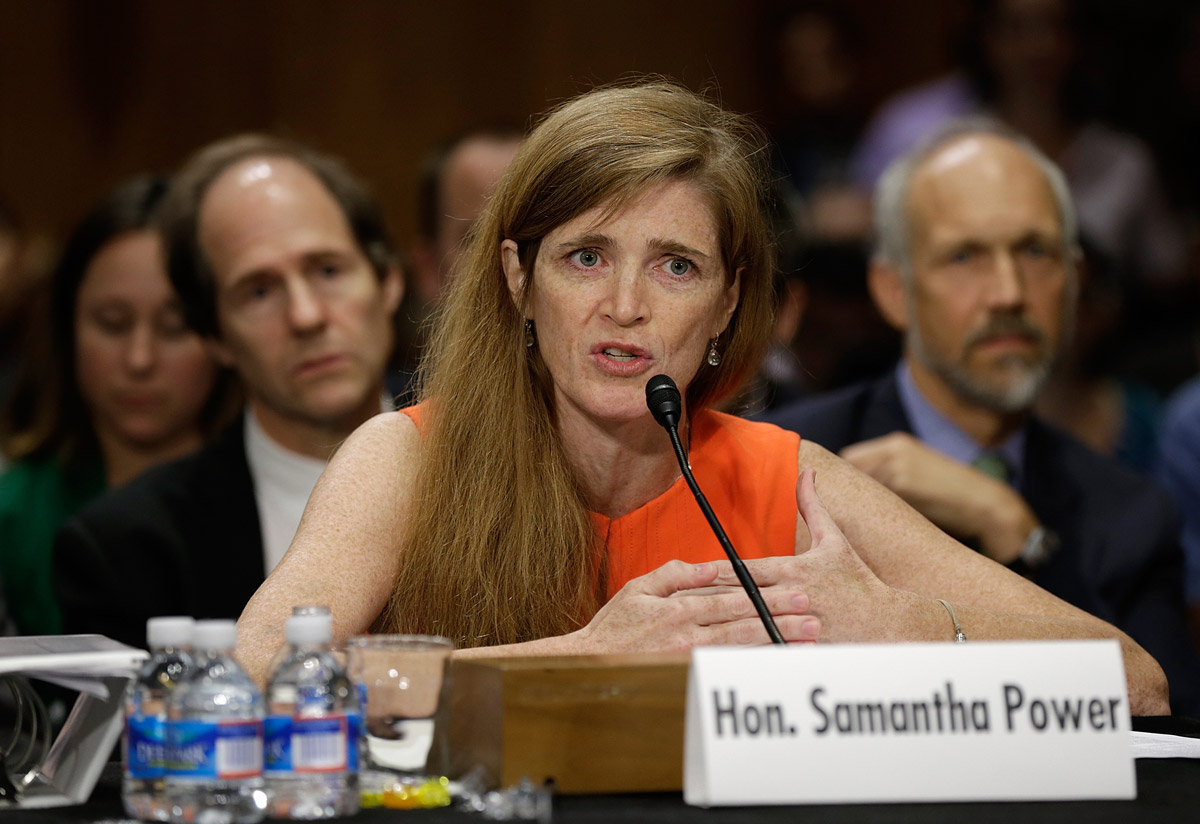
Samantha Power testifies before the Senate Foreign Relations Committee during a hearing on her nomination to be the US ambassador to the United Nations, on July 17, 2013 in Washington, DC. (Win McNamee / Getty Images)
Samantha Power’s new memoir, The Education of an Idealist, is an important and engaging work that should be widely read — especially by those of us who disagree with her. It deftly conveys the linkage between personal biography and political belief, showing Power not as a wily imperialist villain but a committed liberal whose consistent focus on human rights has nonetheless led her to embrace perpetual empire.
This distinction matters because Power’s political causes — atrocity prevention, support for subjugated minorities, international human rights — should be championed by all decent people. Yet her flawed prescriptions — particularly “humanitarian intervention” by the world’s most powerful military — help maintain US dominance in the world and often undermine the very principles they profess to defend.
With its adoration of the military and praise for the neutrality of “public service,” the memoir raises serious questions about contemporary liberalism’s ability to check antidemocratic trends. Power’s idealistic view of governmental bureaucracy sidesteps a necessary debate about complicity with Trumpian injustice — a striking blind spot for one of the world’s leading experts on genocide.