An Empire of Patrolmen
During the Cold War, the US trained cops in more than fifty countries to suppress dissent. This “police professionalization” helped produce death squads in countries like El Salvador and mass incarceration in the United States.
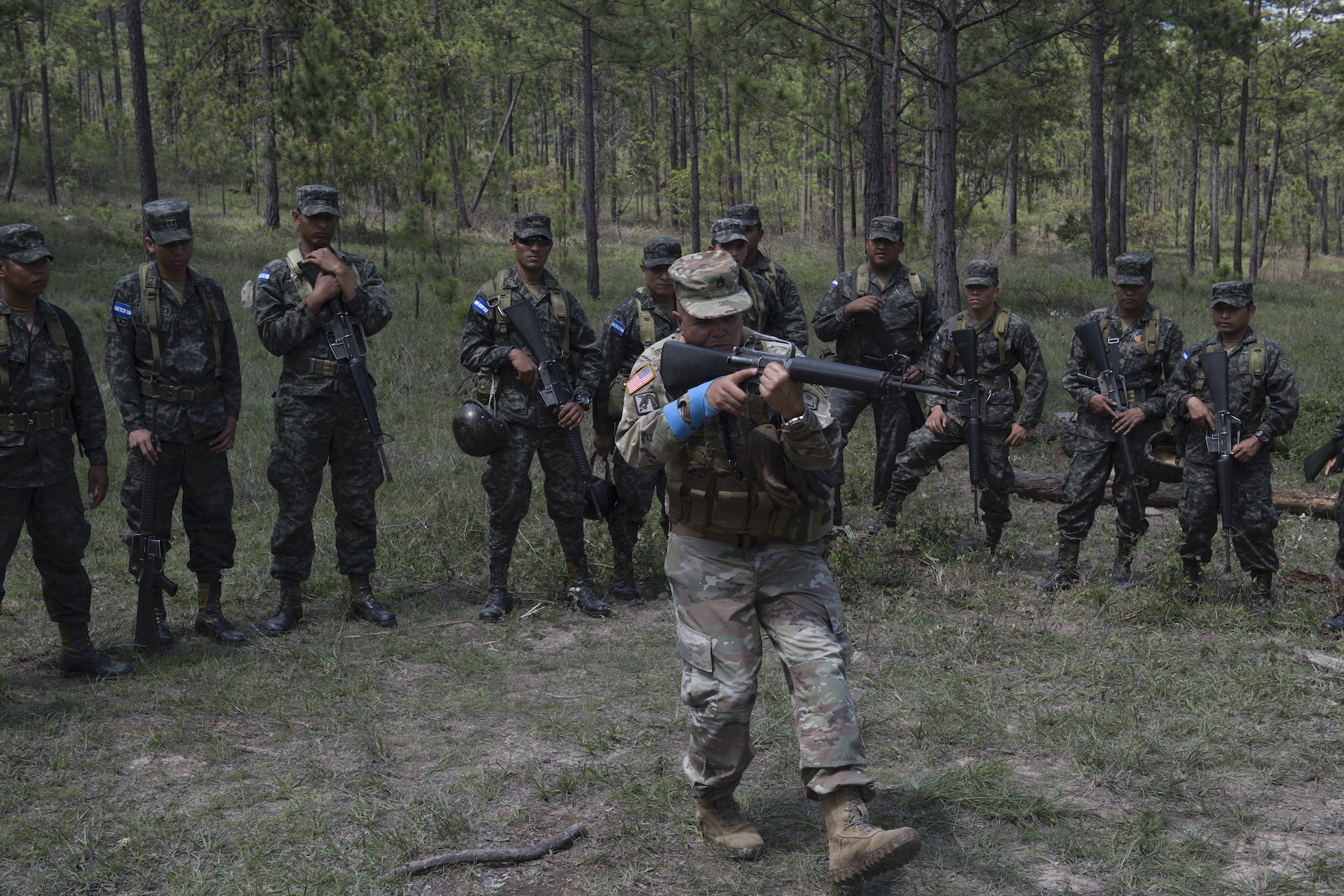
US Army Staff Sgt. Roberto Santini, Puerto Rico National Guard Security Forces Training (SFT) instructor, demonstrates weapon-handling techniques to a group Honduran soldiers during the SFT course June 8, 2019, at the 1st Artillery Battalion in Zambrano, Honduras. Eric Summers Jr / US Southern Command
When we think of liberal cosmopolitans, we don’t usually think of beat cops. But during the Cold War, US police professionalizers trotted the globe, offering technical assistance to local police forces in more than fifty countries as part of a global campaign to stem the spread of communism.
After World War II, the United States became the guarantor of the global capitalist system. As European powers like France and Great Britain withdrew from many of their former colonial holdings, the United States assumed responsibility for suppressing anti-capitalist and anti-imperialist politics in the Third World. Soon, people around the world came to understand the North American superpower as the world’s policeman.
But as scholar Stuart Schrader shows in Badges Without Borders: How Global Counterinsurgency Transformed American Policing, the link between policemen and US empire is more than just a metaphor. One of the most important aspects of US imperial policy is overseas police assistance, which began in earnest after World War II and continues to this day.