Hungarians Can’t Be Bought With Potatoes
The election of a Green mayor in Budapest is a rare setback for Hungary’s far-right premier Viktor Orbán. But if it’s going to mount a sustainable challenge to his rule, the opposition needs to start voicing the malaise of the majority of Hungarians.
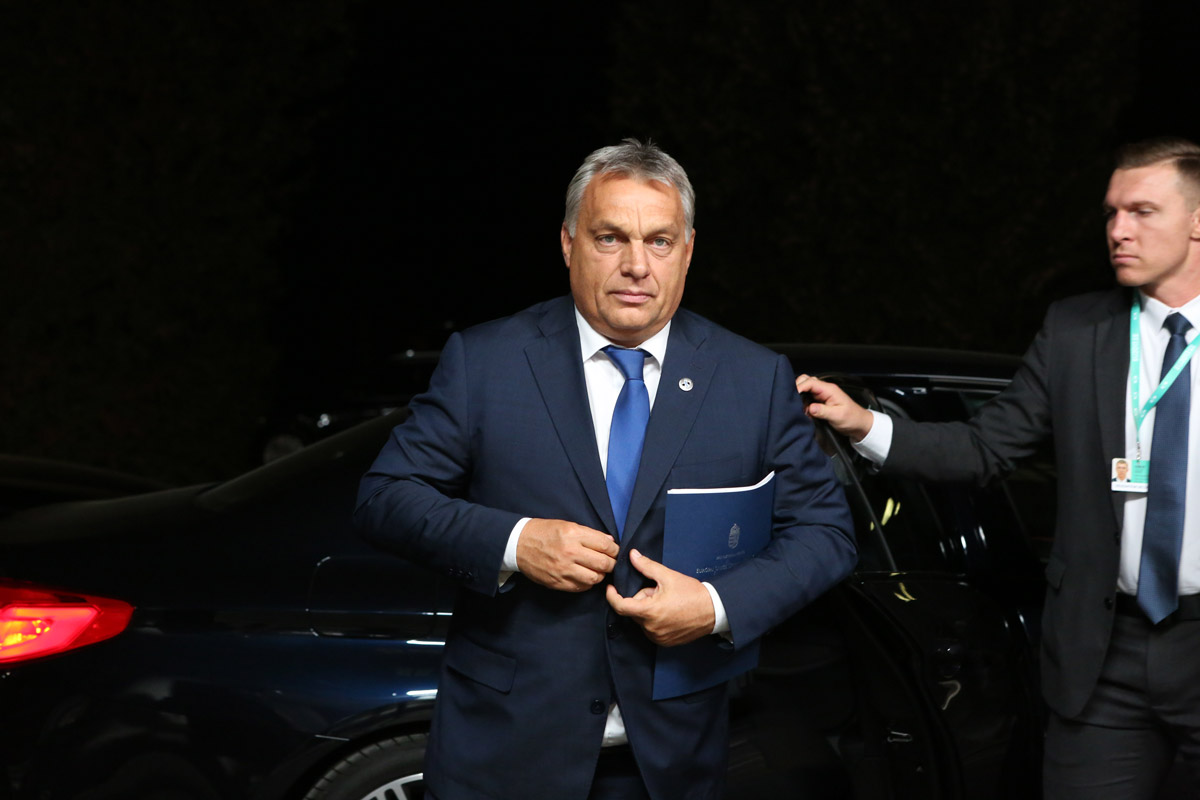
Hungarian prime minister Viktor Orbán. (Annika Haas / Flickr)
Just days after his election win, the new progressive mayor of Budapest’s District III started handing out tons of potatoes to local residents, at a token price. It cannot, alas, be said that such practices are rare in Hungary in election season — a kind of bribe to the voters. Yet the difference here was that László Kiss had already been elected for the next five years. In fact, it was his predecessor — a member of Viktor Orbán’s far-right Fidesz party — who had ordered the potatoes ahead of election day, only for the delivery to arrive too late. This left sack upon sack of spuds for the new leadership to work out what to do with.
The same week, on the morning of October 17, a man on a bike arrived at Budapest City Hall, wearing a backpack of the kind popular among young people in hip areas of Berlin such as Kreuzberg or Neukölln. This unlikely figure was Gergely Karácsony, arriving for his first day at work as mayor of the Hungarian capital, after his election four days earlier. The “Copenhagen Cycle Chic” Facebook page captioned this image as “Urban vs. Orbán” — perfectly capturing the dynamic of the municipal elections, which ended in major setbacks for Prime Minister Viktor Orbán and his allies in the capital and other urban centers.
This caption especially hit on the territorial split in Hungarians’ vote. Fidesz remained mostly unchallenged in rural areas and retained a majority in every single county assembly. Yet cities which Orbán’s allies had previously controlled, including Budapest, instead fell to a united opposition, largely comprised of various liberal and left-wing parties. However, this opposition was not only made up of progressives. Outside the capital, it even relied on collaboration with the nationalist Jobbik — a party of past neo-Nazi ties, today trying to reposition itself as a moderate right-wing alternative to the corrupt and autocratic Fidesz.