What the Presidential Debate on Race Is Really About
When the Democratic establishment opposes the universal programs in Bernie Sanders’s platform, it’s not because they want to do more to address racism. It’s because they want to do less.
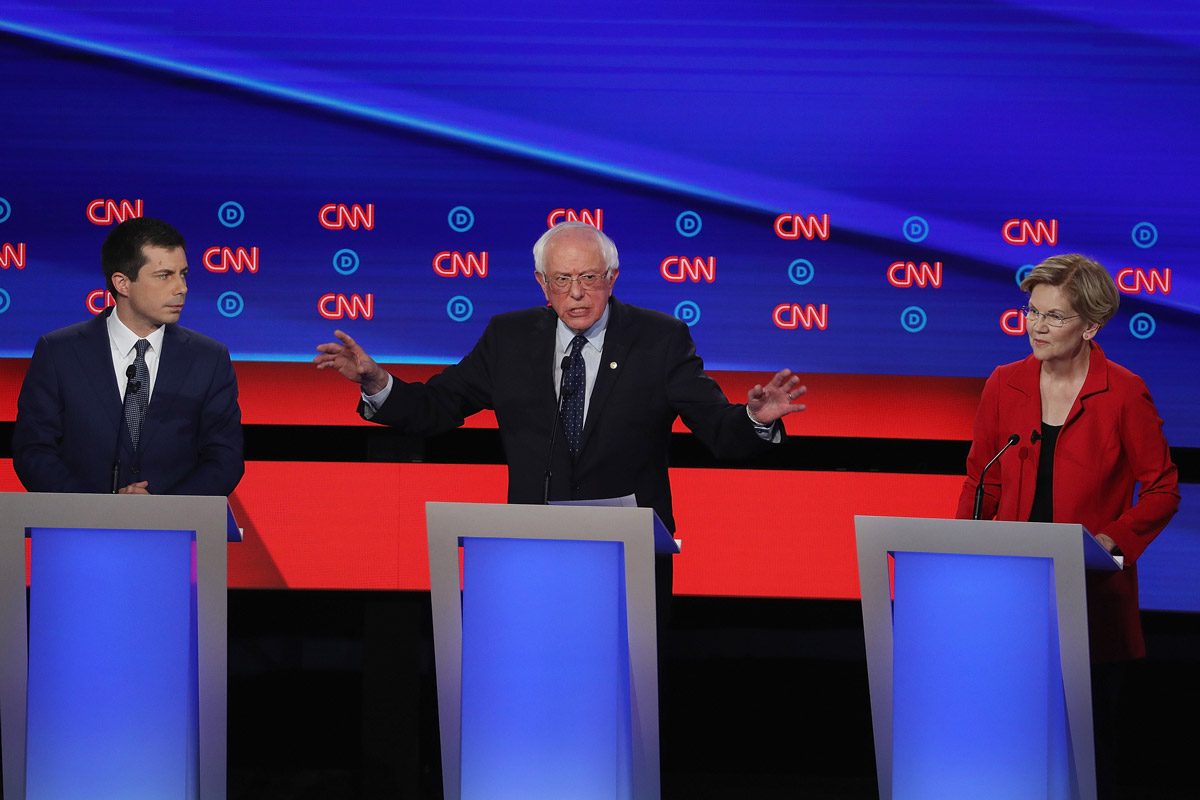
Bernie Sanders speaks while Elizabeth Warren and Pete Buttigieg listen during the Democratic presidential debate at the Fox Theatre on July 30, 2019 in Detroit, Michigan. (Justin Sullivan / Getty Images)
Anyone who watched the US media dissect the free-for-all of the first two Democratic presidential debates could be forgiven for concluding that while the Left may own issues like health care, antiracism belongs to its opponents. The notion that the Left is less committed to fighting racism than the liberal center is now a commonplace view in American politics. And today, self-described “democratic socialist” Bernie Sanders is considered especially vulnerable to charges that he prioritizes economic inequality over racism and discrimination.
That interpretation, however, not only distorts Sanders’s record, it also misunderstands the nature of the divide on this question within the Democratic Party. At base, this isn’t a conflict between progressives concerned about Trump’s bigotry and institutional racism on the one hand, and class-first radicals who focus on economic issues on the other hand. And it certainly isn’t a disagreement between pragmatic advocates of racial justice and socialist ideologues more concerned with fighting capitalism than fighting discrimination.
Rather, the key divide is between left-wingers like Sanders and mainstream Democrats who are committed to maintaining the status quo in American society.