The Unbearable Emptiness of the Presidential Debates
The Democratic Party should be hosting thematic debates with viable presidential candidates on poverty, housing, foreign policy, immigrant rights, the climate crisis, and more. Instead, they are collaborating with the mainstream media to host empty entertainment spectacles.
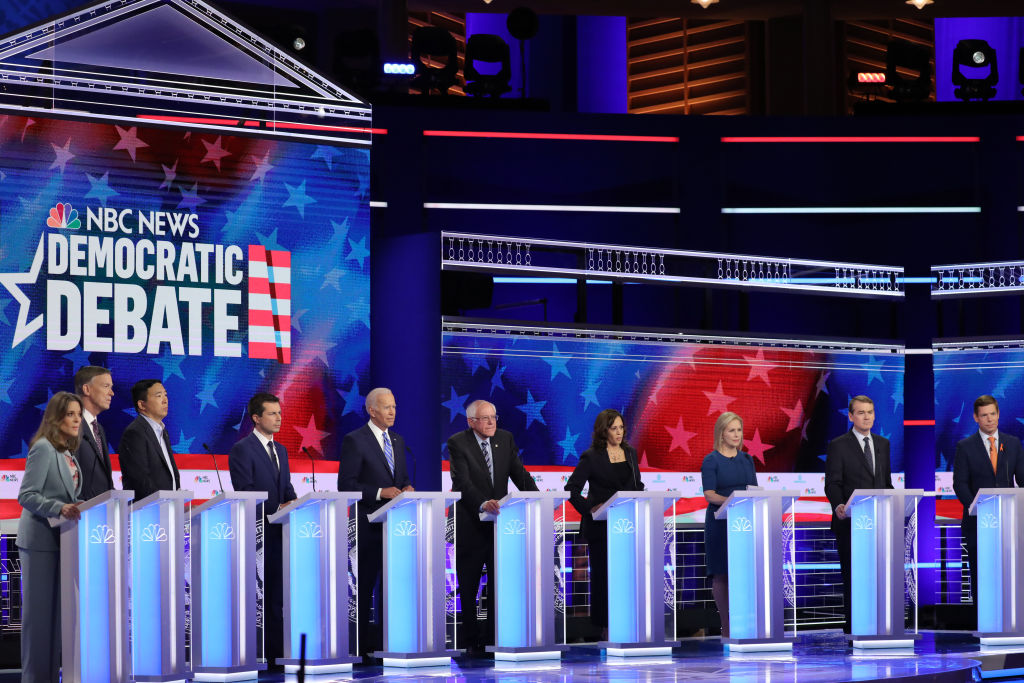
Democratic presidential candidates (L-R) Marianne Williamson, former Colorado governor John Hickenlooper, former tech executive Andrew Yang, South Bend, Indiana mayor Pete Buttigieg, former vice president Joe Biden, Sen. Bernie Sanders (I-VT), Sen. Kamala Harris (D-CA), Sen. Kirsten Gillibrand (D-NY), Sen. Michael Bennet (D-CO) and Rep. Eric Swalwell (D-CA) take part in the second night of the first Democratic presidential debate on June 27, 2019 in Miami, Florida. Drew Angerer / Getty Images
It’s still months before voters will be able to choose among the twenty-four candidates running for the Democratic Party’s nomination to be president of the United States. And yet the endless coverage has already begun. So many candidates are running on the Democratic Party ticket that they had to be crammed into two debates held on back-to-back days — ten one night and ten the following night.
The debates captured much that is wrong with US electoral politics. The format is the product of collaboration between the multibillion-dollar cable news industry and the Democratic National Committee (DNC); DNC chair Tom Perez said it worked for months with its “media partners” to create it.
Who can describe these debates as anything other than grist for the breathless twenty-four-hour cable news mill? How is a format that calls for sixty-second general responses or thirty-second direct responses — with no candidate afforded an opportunity for an opening statement — a serious effort to allow candidates to meaningfully engage the issues, or for viewers to gain any substantive insight into the nature of our problems and the weight of their solutions? The simple answer is that they are not.