The Winner of Last Night’s Democratic Debate Wasn’t Even Onstage
There were ten candidates onstage at last night's Democratic debate in Miami. Bernie Sanders wasn’t one them — but his campaign and policy agenda largely shaped the debate anyway.
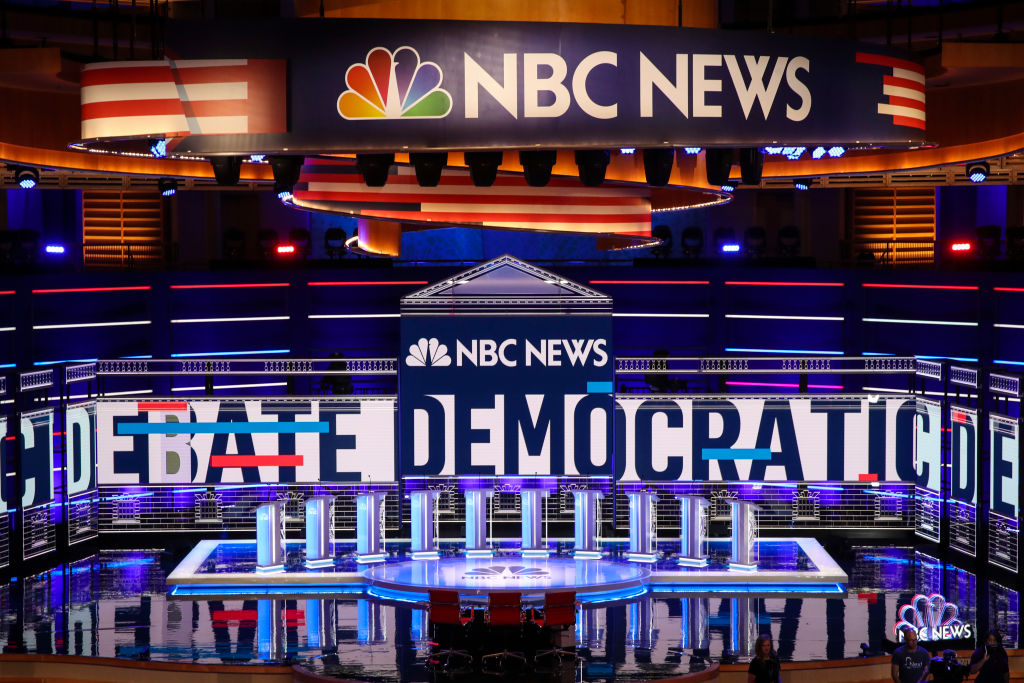
The empty stage before the first Democratic presidential primary debate for the 2020 election at the Adrienne Arsht Center for the Performing Arts in Miami, Florida. Drew Angerer / Getty Images
In 2016, the Democratic Party’s nominee for president was openly dismissive of universal healthcare, calling Medicare for All a “theoretical” idea “that will never, ever come to pass.” Apparently unashamed of her visible and longstanding alliances with corporate America, Hillary Clinton’s campaign stopped well short of full-throated support for progressive policies like a $15 minimum wage and proudly boasted about bipartisan endorsements from Republican lawmakers.
He wasn’t even on the stage, but if last night’s debate is any indication, the 2016 runner-up for the Democratic nomination has successfully shaped the party’s conversation ahead of 2020. With only a few exceptions, a majority of the ten-strong assembly of mostly conventional Democratic politicians were practically jumping over one another to pledge their fealty to key aspects of Bernie Sanders’s agenda, at crucial moments echoing both his proposals and elements of his wider narrative about American politics.
New York Mayor Bill de Blasio, who once served as a campaign manager for Hillary Clinton, thinks it’s time the Democratic Party was reclaimed by working people, assuring the crowd that “there’s plenty of wealth [in America], it’s just in the wrong hands.” Tim Ryan, meanwhile, wants a “working-class party.”