The Welfare State They Were In
Belle and Sebastian's If You're Feeling Sinister seems like a soundtrack of breezy lives of personal heartbreak and occasional triumph unencumbered by the larger troubles of the world. But the album is a direct product of Scotland’s welfare state.
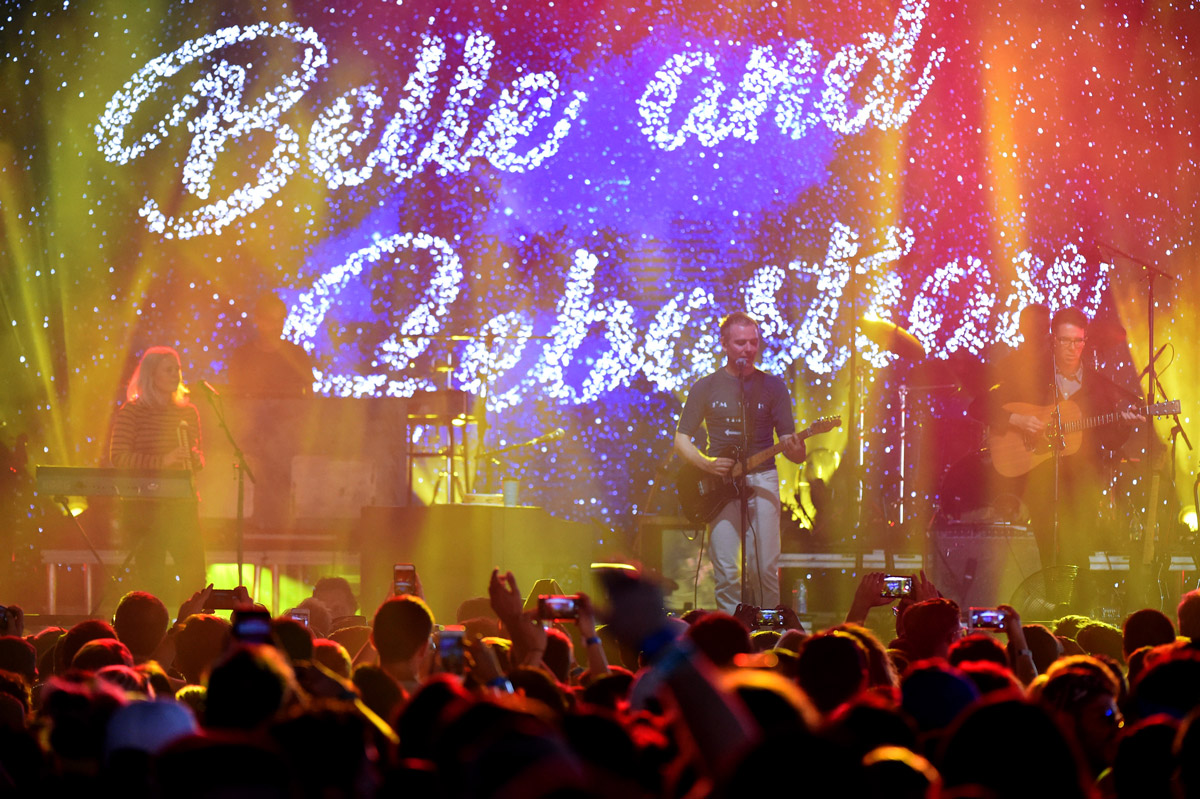
Stuart Murdoch of Belle and Sebastian performs on the Pavilion stage during the 2017 Panorama Music Festival at Randall’s Island on July 29, 2017 in New York City. (Nicholas Hunt / Getty Images)
Put on a record by the Glasgow indie pop band Belle and Sebastian, and the working-class battles that established the welfare state of countries like Scotland, where the band is from, will be the furthest thing from your mind.
The band pioneered the “twee” sound of the 1990s, with cute lyrics mostly about romance or simple storytelling for its own sake backed by reserved, quiet music — with, in their early, classic albums, nary a distortion pedal in sight. There’s little sense of the many miseries of life under neoliberalism in the late twentieth and early twenty-first century, beyond those of heartbreak and the troubles of everyday life.
But there’s an interesting anecdote in a documentary produced by Pitchfork about the band’s classic album If You’re Feeling Sinister, which Belle and Sebastian are performing tonight at the Pitchfork Music Festival in Chicago.