A Radical Approach to the NHS
Decades of stealth attacks haven’t just weakened Britain’s National Health Service — they’ve made it harder to criticize its shortcomings.
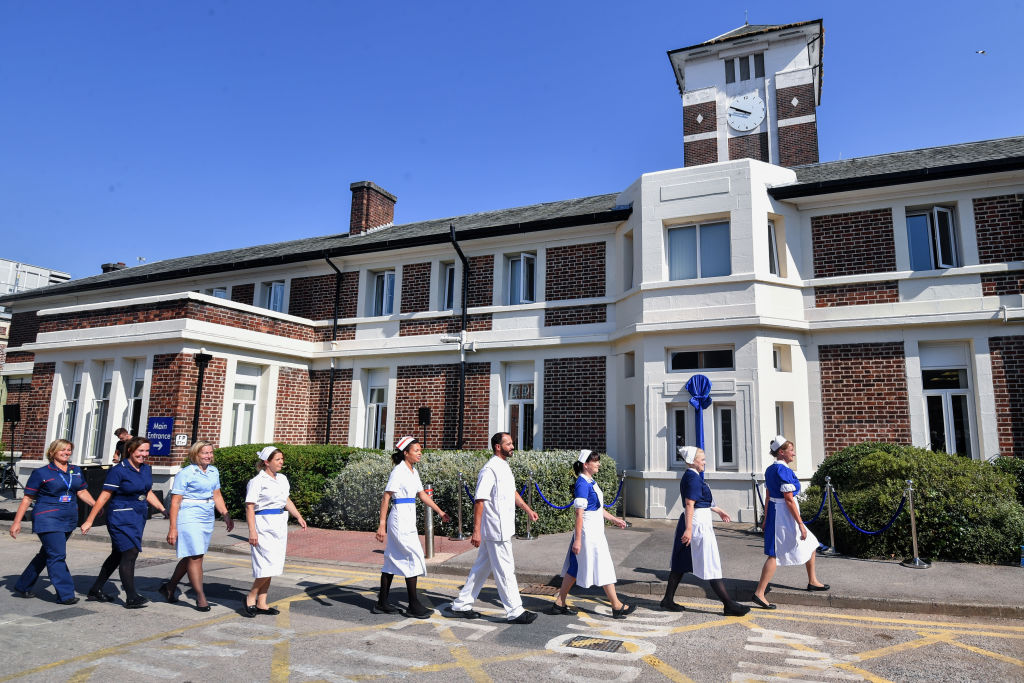
Nurses in uniforms to represent each decade of the NHS arrive at Trafford Hospital to celebrate the seventieth birthday of the NHS at Trafford Hospital, birthplace of the NHS on July 5, 2018 in Greater Manchester, United Kingdom.Anthony Devlin / Getty
The day before Christmas, the UK environment secretary Michael Gove received a panicked call from his fourteen-year-old son, having fallen through a window at home after tripping over a Christmas tree. The boy’s injuries and blood loss were dealt with “kindness and professionalism” by the trauma surgeon at the Chelsea and Westminster hospital, the Conservative minister tweeted. The tone of slight surprise amidst the gratitude is common among those who rarely use the National Health Service (NHS), and notably absent from Gove’s statement was any reflection on how Tory austerity has impacted the NHS’s ability to meet targets and deliver adequate care for people with both critical and chronic conditions.
A few days before Gove Junior’s accident, I was in the resuscitation unit of St Thomas’s hospital, a twenty-minute drive away, directly across the Thames from Parliament, hooked up to a heart monitor, an oxygen mask, and multiple drips. Earlier that day, the cab driver booked to take me to a TV appearance left his car to chastise me for being late, and found me collapsed unconscious outside my apartment, covered in blood after an epileptic seizure, and called an ambulance. The producer alerted my colleagues, who in turn told my friends, leaving them to spend hours calling the emergency departments of every hospital in the vicinity until eventually my name showed up in the IT system.
The consultants told them I was likely to be discharged the following day but would need to be accompanied home: the hospital promised to let them know a rough discharge time. That call never came: with a shortage of beds, the doctors rushed to discharge me, still confused and with no memory of the previous day, and with no coat, wallet, or house keys. With phone calls unreturned, my friends turned up on the off chance I might still be there and luckily arrived just in time to collect me with a fractured skull, and a swollen tongue I’d bitten through in multiple places over the course of repeated seizures.