The European Union Is an Antidemocratic Disgrace
The European Parliament elections start today. But the body itself is an insult against democracy that exists only to rubber-stamp neoliberal rule.
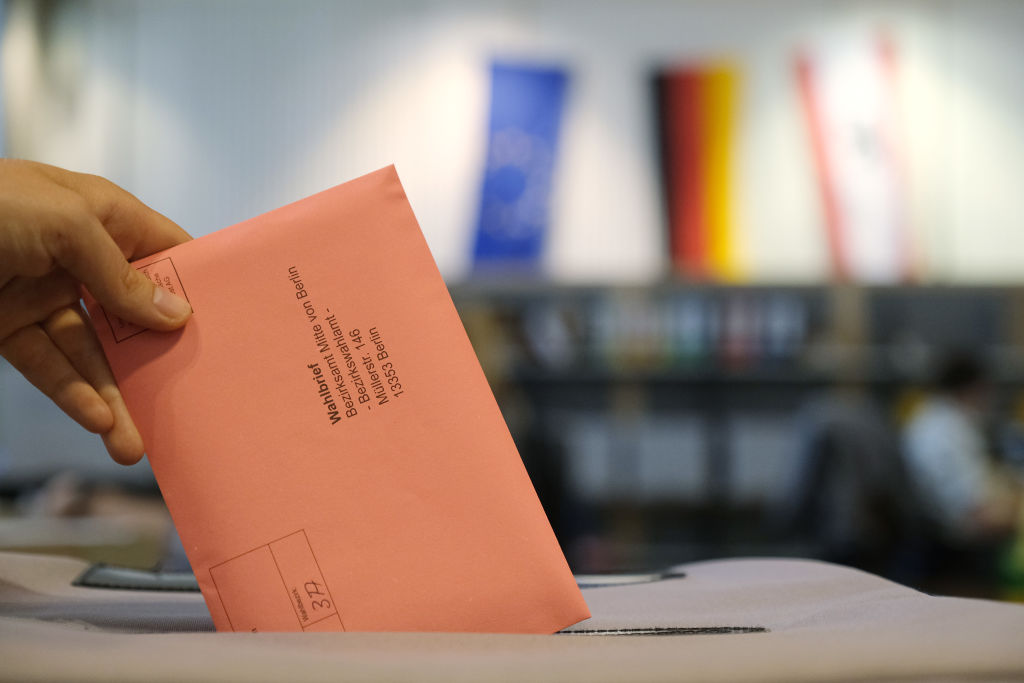
A voter casts her ballot in early voting at a local voting office in European parliamentary elections on May 21, 2019 in Berlin, Germany.Sean Gallup / Getty
If there’s an opinion that everyone, across the entire political spectrum, seems to share about the upcoming European elections, it is that these will be “the most important elections in the history of the European Union.” All sides pitted in battle – from the “eurosceptic populists” to pro-EU elites to everyone in between, including the UK Labour Party — claim that the make-up of the next Parliament will be decisive for Europe’s future. As former Greek finance minister Yanis Varoufakis recently stated: “The contest for seats in the next European Parliament . . . will fundamentally shape the future of Europe for years to come.”
But is this really the case? Such grand claims might make sense if the EU were a fully-fledged federal state with a truly sovereign parliament — in other words, if it were truly a parliamentary democracy. Yet it is anything but. In fact, the European Parliament has very limited powers: for starters, unlike national parliaments, it doesn’t even have the power to initiate legislation. This is a power uniquely reserved for the EU’s “executive” arm, the European Commission — the closest thing to a European “government” — which avows itself “completely independent,” promising “neither to seek nor to take instructions from any government or from any other institution, body, office or entity.”
This, of course, includes the European Parliament, which may only approve or reject (or propose amendments to) the Commission’s own legislative proposals. This alone sets the EU firmly apart from any meaningful democratic tradition, and casts serious doubts over the alleged importance of this weekend’s elections.