We Just Remembered How to Strike
2018 might have been the year that convinced workers that the strike holds the power needed to move today’s corporate giants and austerity-obsessed governments.
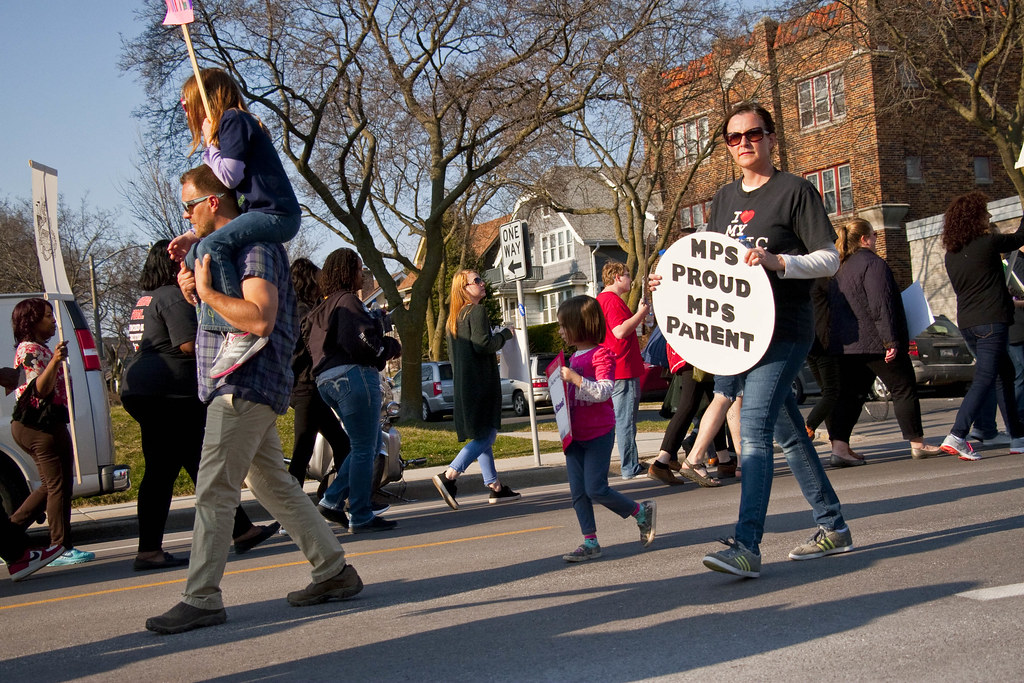
Milwaukee Public School teachers, parents, students and supporters picket line MPS administration building in April 2018. cemillerphotography.com
We might not exactly be able to define the series of strikes in 2018 and early 2019 as a “strike wave.” But the past year, the strike finally broke free of the bonds of business-as-usual collective bargaining in diverse settings, the rank and file took charge in a number of mass stoppages, the long-brewing revolt of those working in the social-reproductive ream took shape, and telecom workers continued their long string of strikes. Meanwhile, tech workers may have just started their own strike traditions. In most cases, the strike brought badly needed victories for labor.
As reported by the Federal Mediation and Conciliation Service (FMCS), the number of work stoppages in 2018 actually fell below the levels of recent years at about 122 to 112, in descending order, to about ninety. But the highest-profile strikes were not counted by the FMCS: 373,000 education workers in six “red” states with no collective bargaining rights fielded grassroots strikes, reaping significant victories.
The growing rebellion of private-sector social-reproduction workers followed their public education colleagues, as thousands of healthcare and hotel workers “hit the bricks.” Eighty-four thousand hospital workers struck in 2018, as did nineteen thousand hotel workers. In addition, over nine thousand members of the Communications Workers of America (CWA) across the Midwest struck AT&T for several days beginning on May 31. Another 3,200 telecom workers struck in collective bargaining situations. Twenty thousand non-union Google tech workers walked off the job for part of a day in protest of the tech giant’s tolerance of sexual harassment.