Betting on the Working Class
The nationwide teachers' strikes are a reminder that the working class is still the most powerful agent for radical change.
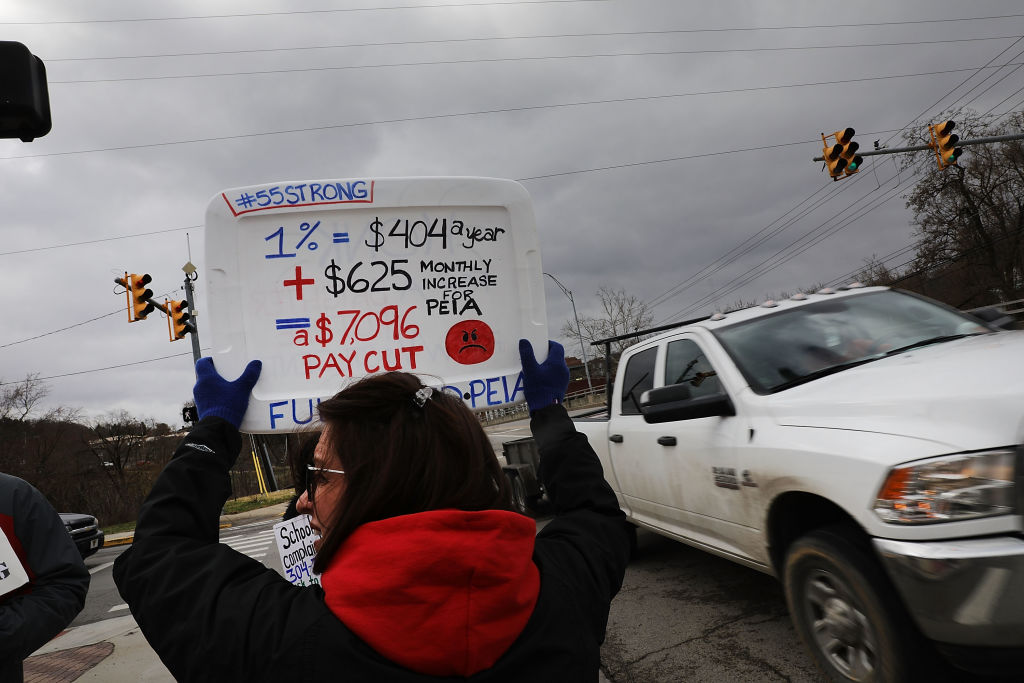
Teachers rallying on March 2, 2018 in Morgantown, West Virginia. Spencer Platt / Getty Images
Many of the big, strategic lessons from the teachers’ strikes aren’t widely or universally accepted on the Left, or even among socialists. One is that the working class is still the most powerful social agent for progressive, radical change. It’s sometimes hard even for Marxists to believe this because many of us haven’t seen it demonstrated in our lifetimes. But now we’re seeing it in practice, and it should give us a lot of confidence about our strategy and our political priorities.
Workplace action and strikes remain our most powerful weapon — there’s no equivalent form of action that creates as deep a crisis for capital and the state. This used to be a commonplace notion on the Left until the 1960s in the United States, and longer elsewhere, but it’s a fact that is either not accepted today or marginally accepted. The general idea today is that there are many different social struggles and it doesn’t really matter where you choose to focus. This leads many activists to just respond to what happens.
Socialists should have a different perspective on where power lies and where our strategy should be focused. One particular place of focus is building a “militant minority” of radicals in workplaces and in the class struggle.