Beyond the Rank-and-File Strategy
The rank-and-file strategy isn't enough. We should examine the broad range of working-class organizing strategies and experiences that are today's socialists' collective heritage.
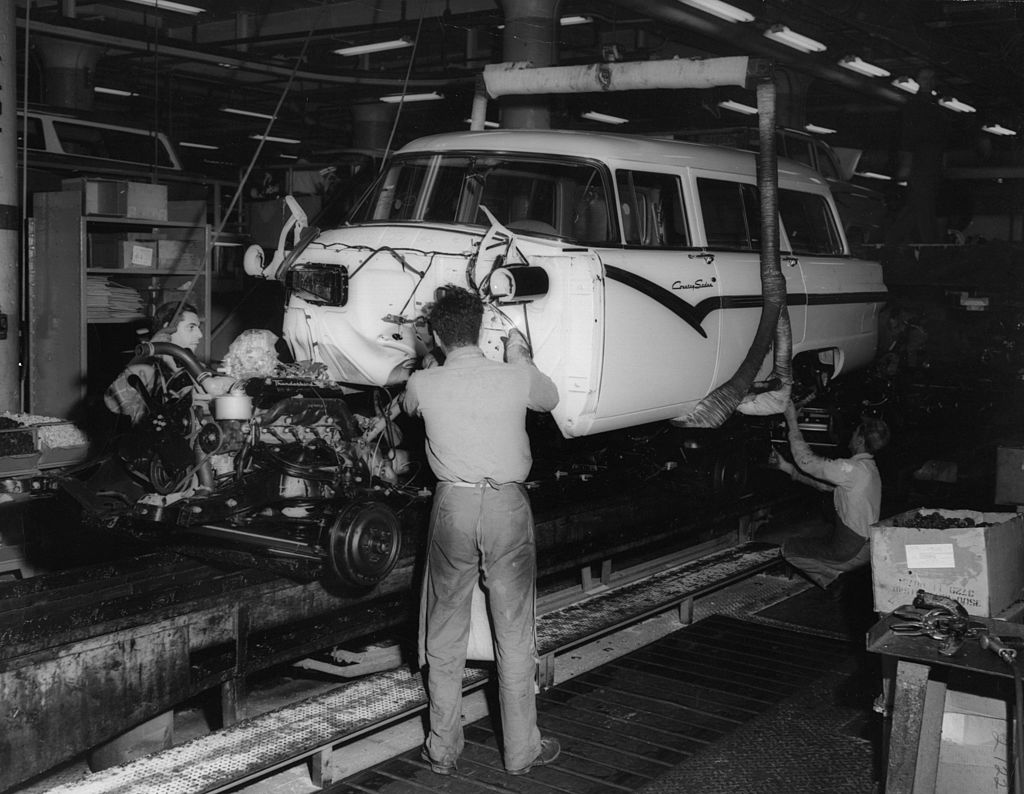
An American Station Wagon car body being joined to its chassis on a factory production line, circa 1960. Keystone / Getty
For the most part, Barry Eidlin’s recent Jacobin article “What Is the Rank-and-File Strategy, and Why Does It Matter?” is a straightforward argument for a particular approach to socialist organizing at workplaces and in the working class generally. As such it is a useful reference point for both further elaboration of that approach and for a serious critique of it.
One indication of the need for a wider debate about the rank-and-file strategy, however, is Eidlin’s distortion of the strategy and practice of groups in the New Communist Movement of the 1970s and ’80s. Eidlin’s assertion that those groups “largely saw workplace organizing as a venue for socialist cadre to engage in propagandizing for a revolution they believed to be imminent” — even with his qualifier “largely” — is simply wrong.
It’s true that a couple of groups, especially early in their development, went down that path. But the dominant approach to workplace organizing in the New Communist Movement was one or another version of a “build class struggle unions” perspective. Key components of that strategy were building rank-and-file caucuses, uniting where possible with progressive staffers and union leaders, organizing the unorganized and in many cases the unemployed, and, crucially, giving high priority to meshing struggles at the workplace with the freedom movements of peoples of color.