Did You Really Think Trump Was Going to Help End the Carceral State?
Trump’s First Step Act has been lauded by everyone from criminal justice reform organizations to Van Jones as an important blow against the carceral state. It’s not — and it does far more harm for the incarcerated than good.
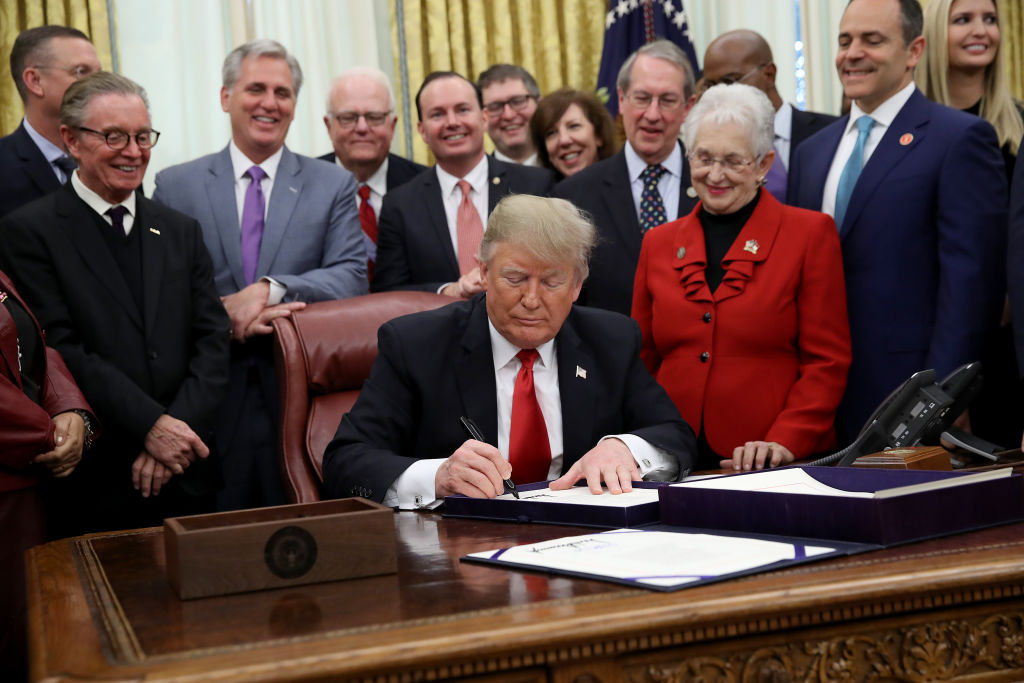
Donald Trump signs the First Step Act and the Juvenile Justice Reform Act in the Oval Office of the White House December 21, 2018 in Washington, D.C.Win McNamee / Getty
With much fanfare, President Donald Trump signed the First Step Act into law in December. New Jersey senator and presidential candidate Cory Booker hailed the legislation as a milestone that marked a “meaningful break from decades of failed policies that led to mass incarceration.” Other supporters were more measured, characterizing it as a modest first step to keep the momentum going for criminal justice reform.
But the greatest sins of the First Step Act are not its modesty. The legislation nicks the edges of the carceral state while bolstering disturbing trends in criminal justice reform. CNN commentator Van Jones has claimed that the First Step Act is a “rare clean bill” that “does no harm.” Jones is wrong — it does much harm.
Grounding penal policy in the best evidence-based research is a mantra in criminal justice reform. Yet key provisions of the First Step Act are at odds with leading research on how to enhance public safety while minimizing social and economic costs and maintaining a fair criminal justice system that treats everyone — including people who are imprisoned — with dignity.