Cuomo’s “Carceral Humanism”
Andrew Cuomo is being touted as a 2020 presidential contender. But his juvenile justice reform law does more to shore up the carceral state than attack it.
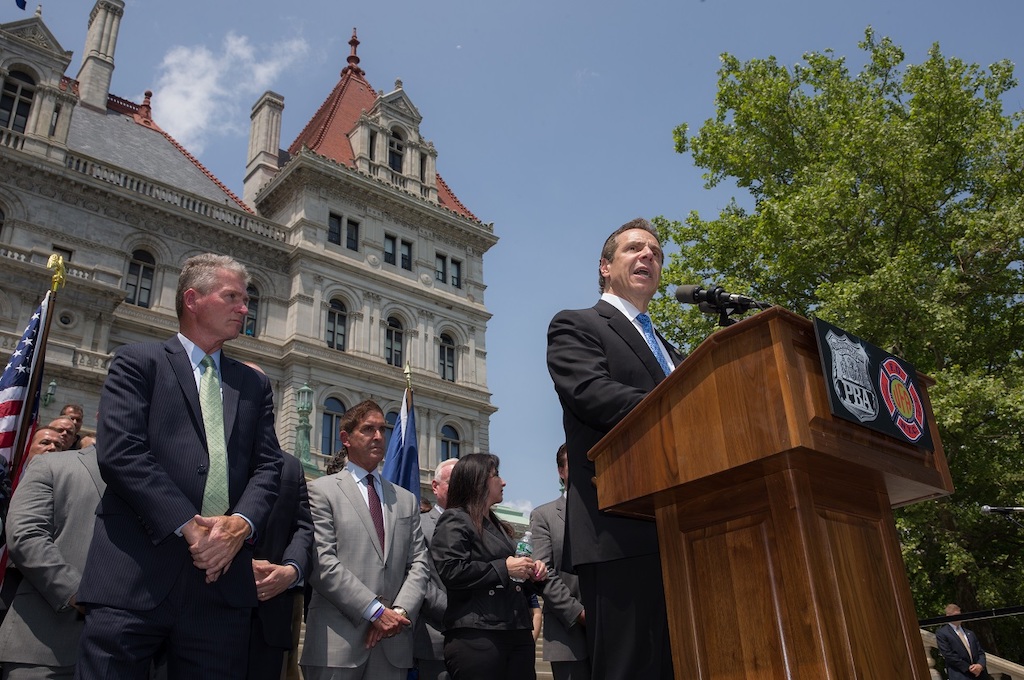
New York governor Andrew Cuomo speaking at rally in 2015. Wikimedia
It was a historic day for youth, New York governor Andrew Cuomo told his audience. With the “Raise the Age” bill, the state would no longer be one of only two that prosecuted and imprisoned all sixteen- and seventeen-year-olds as adults.
For years, parents, community activists, and liberal reformers had pushed for the change. The 2015 death of Kalief Browder, who at the age of sixteen landed in Rikers Island prison for allegedly stealing a backpack, added more urgency. After three brutal years awaiting a trial that never came, Browder returned home innocent of any charges but deeply traumatized. Support from his family, the media, and even celebrities — from Oprah to Jay-Z — was not enough. Unable to retrieve his lost youth, Kalief committed suicide.
Two years later, on April 9, 2017, Cuomo signed the Raise the Age bill in Harlem. Turning to Kalief’s brother, Akeem, he proudly proclaimed: “Your brother did not die in vain. Your brother died to make a social change and he has. God Bless You.” Standing alongside the Reverend Al Sharpton and Harlem Democrat Charles Rangel, Akeem looked on as Cuomo affixed his signature to the bill. Politicians, the press, and many youth advocates celebrated.