Unions Still Haven’t Rebounded
Despite a string of encouraging strikes and labor victories, the latest numbers show that union density fell to a new low last year.
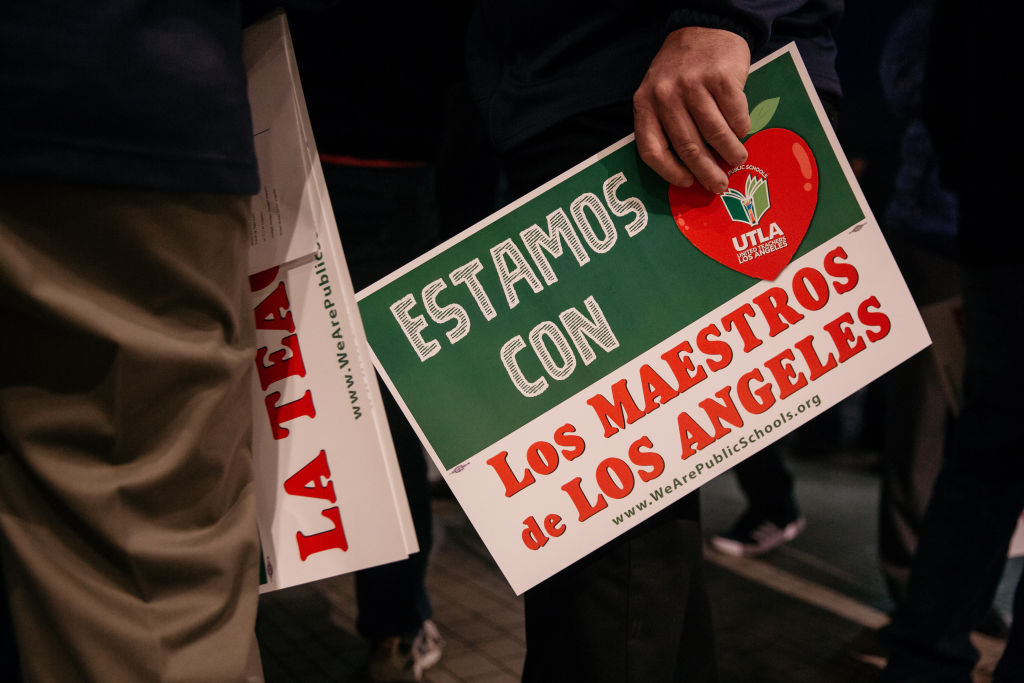
Firefighters hold signs in downtown Los Angeles in a display of solidarity with the city’s striking teachers on January 22. Scott Heins / Getty
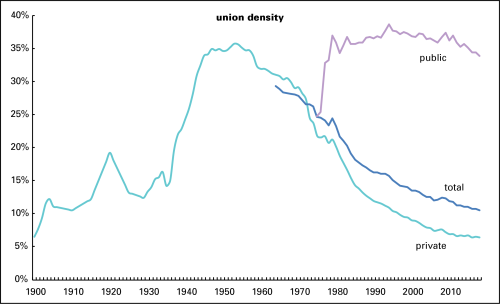
Union density — the share of employed workers belonging to unions — fell to 10.5 percent in 2018, the lowest since the Bureau of Labor Statistics began reporting the data in its modern form in 1964, down from 2017’s 10.7 percent. (See graph below.) After rising 0.1 point in 2017, private sector density fell back to match 2016’s 6.4 percent — a hair below 1900’s level, 6.5 percent.
Republican governors’ war on public sector unions is having a visible effect: just 33.9 percent of government workers belonged to unions last year, the lowest since 1978, when membership was on an upswing — an effect that is only going to intensify as the effects of the Supreme Court’s decision in the Janus case, which forbids mandatory payment of union dues, spreads.