An End to the Silence
After violence against a left-wing opposition leader, Serbians have taken to the streets. The demonstrations are breaking through the blanket of silence imposed by an increasingly authoritarian government.
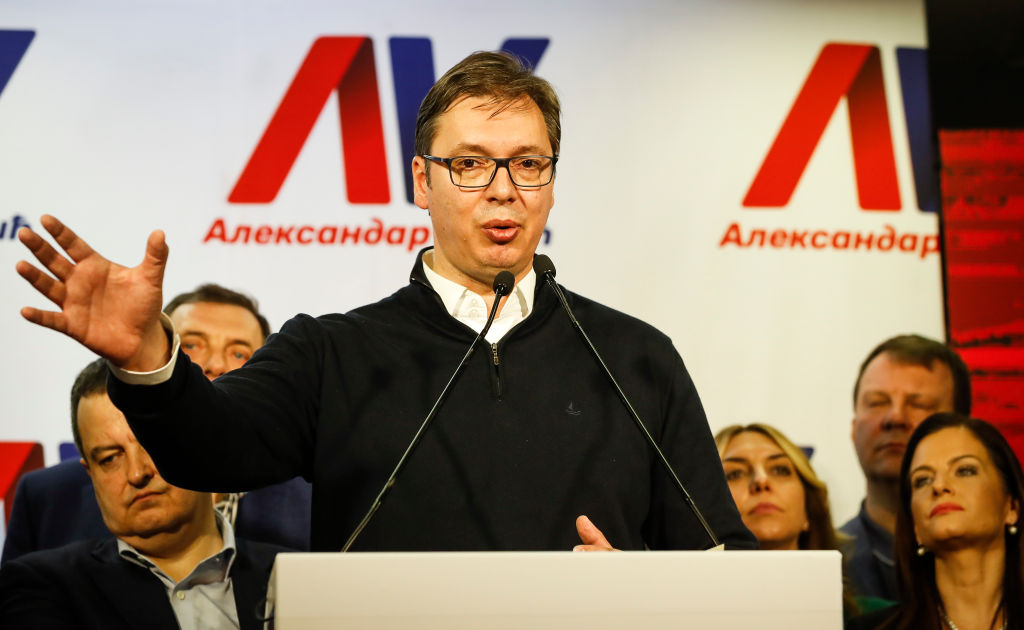
Aleksandar Vucic speaks during a press conference on April 2, 2017 in Belgrade, Serbia.Srdjan Stevanovic / Getty
Recent developments in the Balkans are returning Serbia to international focus. President Aleksandar Vučić, whose conservative-populist Progressive Party holds near-absolute power in Serbia, is currently embroiled in negotiations with Kosovo and the European Union. Yet at the same time, he faces a domestic backlash over the way his authoritarian rule is affecting Serbia’s own political life.
Every Saturday over the last seven weeks thousands of people have taken to the streets of Belgrade to express their outrage at the beating of left-winger Borko Stefanovic, one of the leaders of the opposition bloc “Alliance for Serbia.” These peaceful protests have also denounced increased media repression after a shady acquisition of the two national TV stations by figures close to the government, and the burning of an investigative journalist’s house with Molotov cocktails in the middle of the night.
It remains to be seen whether the protests will continue to grow. Yet in voicing their call for democracy, press freedom, and an end to political violence, the demonstrators are breaking through a blanket of silence imposed by Serbian political leaders and media alike.