The Honduran Nightmare
Among the migrants amassed at the southern border are thousands of victims of the 2009 Honduran coup — a coup legitimized and shored up by the United States.
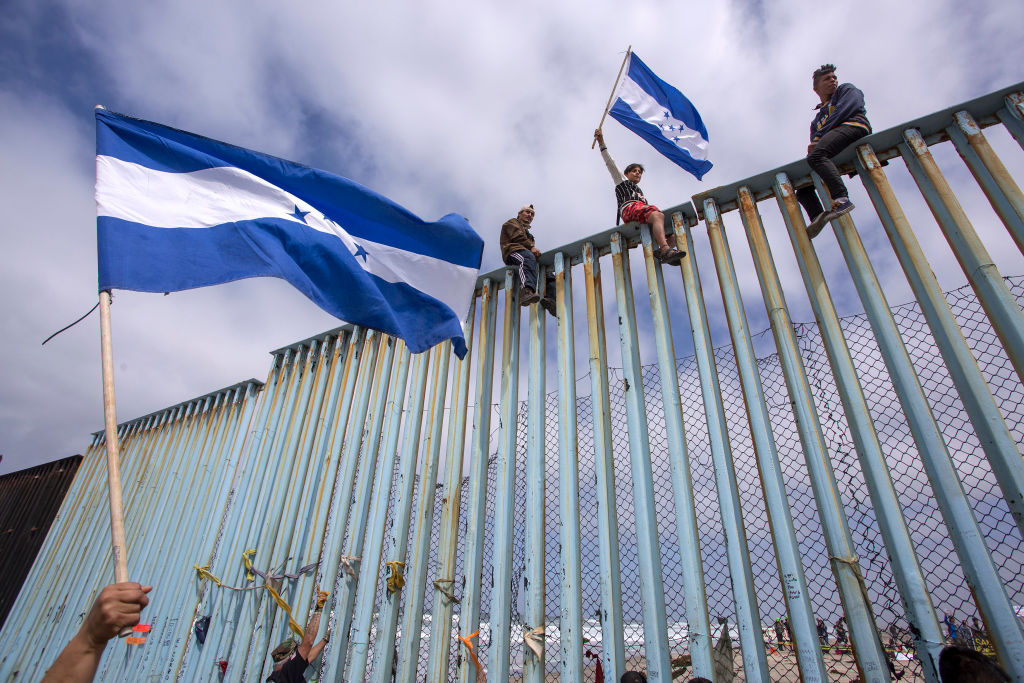
People hold Honduran flags at the border fence during a rally with members of a caravan of Central American asylum seekers and supporters on April 29, 2018 in Tijuana, Baja California Norte, Mexico. David McNew / Getty
Nearly ten years after a military coup d’état ousted a democratically elected Honduran president, thousands of Honduran families gather at the US-Mexico border. They will likely mark that somber anniversary a few months from now in the improvised shelters and tent cities where they currently wait to present their asylum claims to US immigration authorities.
In her new book, The Long Honduran Night, UCSC Professor Emerita Dana Frank describes the crisis that has gripped the Central American nation in the wake of the 2009 coup, and offers a fierce indictment of US policy in Honduras. The timely publication brings much-needed political context to a US audience, an antidote to the vacuous partisan posturing that dominates the current media discourse. (For Spanish speakers, I highly recommend the new volume on Honduras from CLACSO.)
The book follows the US role in sustaining the post-coup regime and the struggles of the grassroots Honduran resistance, centering Frank’s own story of engagement and militancy. Rejecting the authoritative, formal tone of academic literature, her narrative takes us back and forth from humid Honduran union halls and tense highway blockades to DC hotel rooms and the halls of Congress. What emerges is an account of the personal relationships and convictions that fuel movements, punctuated by glimpses into the machinations of US imperial power in Central America.