Asylum for the Few
US immigration and refugee policy has long been determined by what is most politically beneficial to the US — not who actually deserves protection.
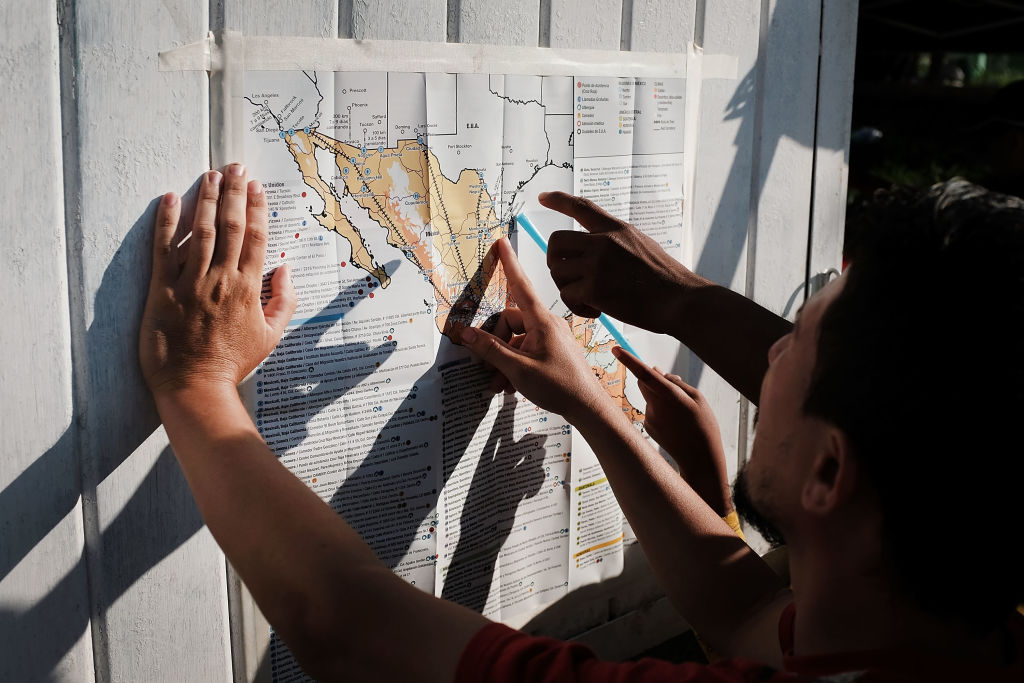
Some of the thousands of Central American migrants look at a map after arriving in the small town of Santiago Niltepec on October 29 in Santiago Niltepec, Mexico. Spencer Platt / Getty
Rocío Hernández has twice been held in immigration detention in the United States. Both times, in October 2013 and March 2014, she had come from Mexico to request political asylum at the border crossing. And both times, after spending a month in detention, she was deported. When she first asked for asylum, she had been living in Mexico, her birth country, for four years. Before that, she had spent fifteen years living undocumented in the United States.
“I had gone back to Mexico to go to school, for the chance to have a professional career,” she told me over the phone in 2014. She was in Veracruz, where she had gone to live after being deported for the second time.
With long black hair, a dark complexion, bright eyes, and a wide, vivacious smile, Rocío migrated to the United States with her family, without papers, when she was four years old. Her life unfolded like that of a typical American girl: she went to school and thought about what she would do when she grew up. But when she tried to continue her education after high school, the door slammed shut. She did not have a social security number.