Emmanuel Macron’s Faux Antiracism
France Insoumise MP Danièle Obono on how Emmanuel Macron's "extreme center" is feeding the rise of the far right.
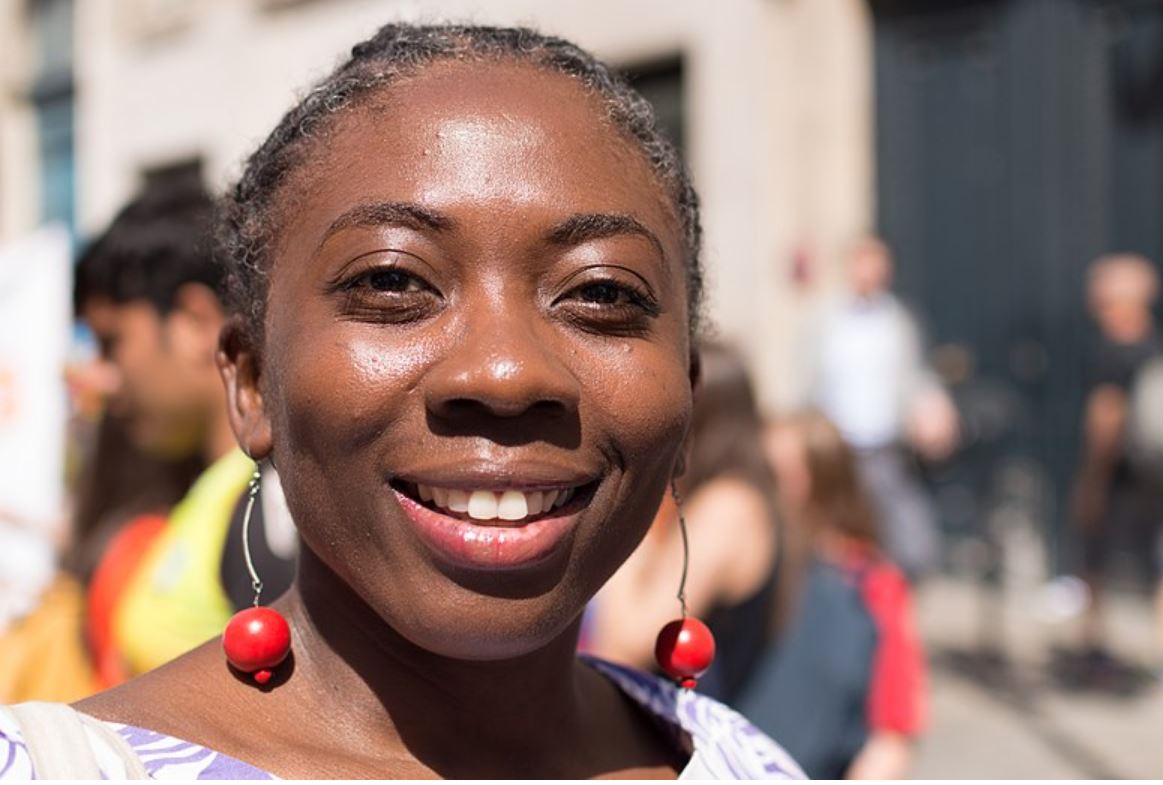
Danièle Obono at the Paris Pride March in 2017. Wikimedia Commons
Opinion polls from last year’s French presidential runoff showed that the single biggest reason voters backed Emmanuel Macron was to “stop Marine Le Pen.” Already then, the low turnout indicated a lack of enthusiasm for his campaign; and since his election last May the liberal president has continued to lose support. Ministerial resignations, a scandal over his bodyguard posing as a policeman to beat protesters, and recent fuel protests, have brought Macron to historic low popularity ratings just eighteen months into his rule.
With European elections looming in May, the president again seeks to polarize French politics as a binary choice between the “progressive” center and “nationalist” populists. In this cause, pro-Macron media have sought to identify the main opposition to his left, Jean-Luc Mélenchon’s France Insoumise movement, with Le Pen’s own Rassemblement National (formerly known as Front National). At a European level, the president has cast himself as the “anti-Salvini” opposite to the hard-right Italian interior minister.
Yet in practice Macron’s record in combatting racism is hardly glorious, with the extension of child detention as well as anti-terrorist measures that have emboldened police harassment of France’s Muslims. Jacobin’s David Broder spoke to La France Insoumise MP Danièle Obono about Macron’s difficulties, the fight against institutional racism in France, and how elected representatives can provide a “megaphone” for social movements.