McMansion, USA
A McMansion is like obscenity: you know it when you see it.
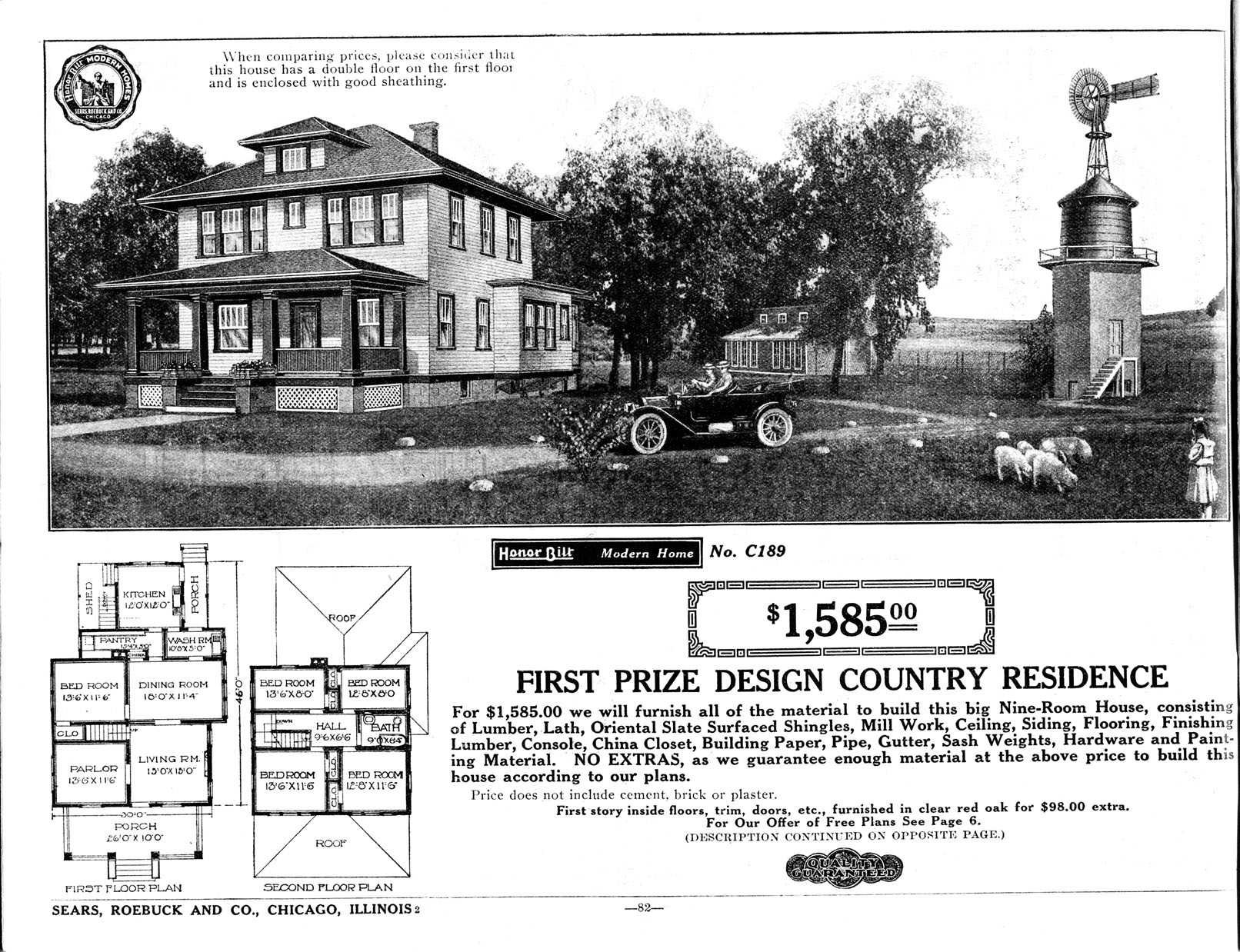
“The Hillrose” (Model No. C189) Sears Catalog Home appearing in the 1916 Sears Roebuck Catalog.Sears Roebuck Catalog / Wikimedia
I often tell interviewers who ask me to define the term “McMansion” that McMansions are like obscenity: you know it when you see it. Like beauty (and obscenity), McMansions seem to be in the eye of the beholder. The simplest way to define a McMansion is: a poorly designed, poorly executed, oversized house. But there’s something more to them than looming entryways, vinyl siding, and mismatched windows that causes the knee-jerk hatred they rouse in so many. In part, the wounds are historical: as the 2008 crash unfolded, McMansions became the symbols of aspirational hubris, of excess, of wanting too much and borrowing too much to get it.
Today, McMansions are no longer quite same symbols of economic hubris and loss. (If the McMansion were truly dead, home size would have never risen to new heights shortly after the recession). What they truly represent, what they’ve always represented, is how under late capitalism, modes of consumption and commodification reach ever-deeper into our daily lives.
Like reality TV and video art installations, McMansions are inherently postmodern. Postmodernism, to paraphrase the philosopher Frederic Jameson in an essay on the subject, involves the commodification of culture, art, and, ultimately, of one’s lifestyle. Postmodernism removes context from subjects, weakens or eliminates historicity, and effaces the divide between high culture and consumer culture, reducing culture to a series of images, the consumption of which becomes a new sort of commodity fetishism.