The Centrist Charade
For many in today’s commentariat, politics is about mediation between irrational tribes rather than conflict between competing interests.
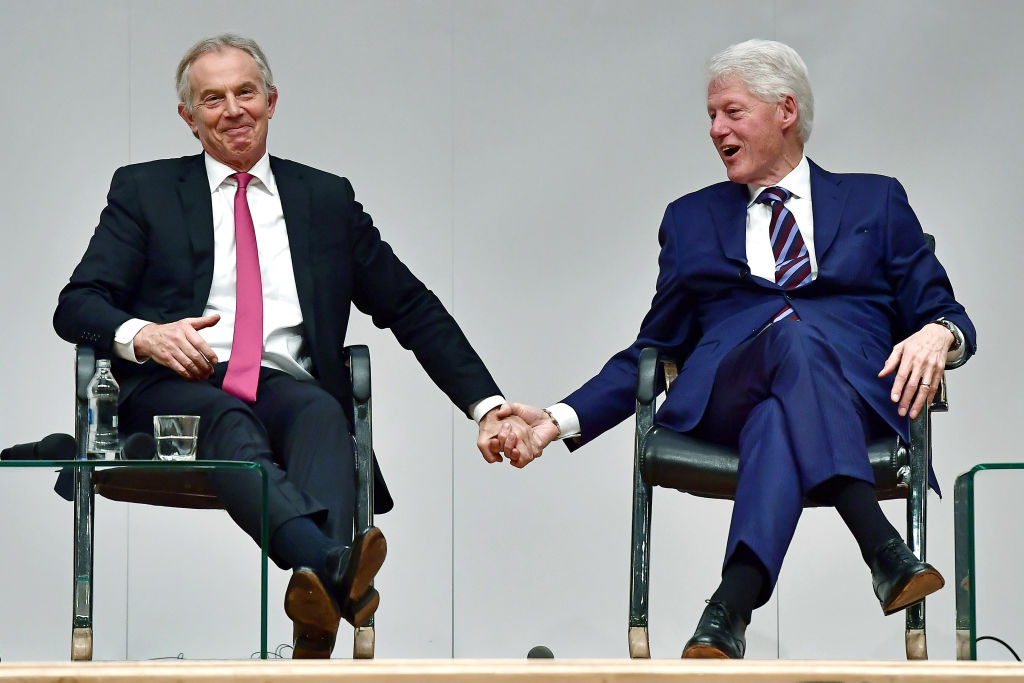
Former US president Bill Clinton holds hands with former British prime minister Tony Blair as they attend an event to mark the twentieth anniversary of the Good Friday Agreement at Queens University on April 10, 2018 in Belfast, Northern Ireland. Charles McQuillan / Getty
Not a day goes by without a so-called “centrist” lamenting the rise of populism and the “polarization of politics” on social media and across comment page diatribes, where the last samurais of Blairism express their longing for a return to the good old days when politicians told the truth.
It’s a somewhat delusional premise that Tony Blair was the beacon of facts and evidence-based policy. That particular rose-tinted nostalgia seems to be confined to newspaper columnists who, perhaps not surprisingly, are happy to forget the run-up to the Iraq War and the policy decision for which Tony Blair is most widely remembered.
The same phenomenon seems to underpin the quest for a British Macron, which persists despite Britain already having endured more than a decade under forty-something-year-old centrist prime ministers Blair and Cameron. These one-time saviors of the political center actually presided over the collapse of their own brands of economic liberalism, which is now widely associated with squeezed living standards, stagnant pay, and cuts to public services.