Opening the Door to the Far Right
Sunday's election in Sweden shows how the decline of robust social-democratic guarantees can feed the rise of the far right.
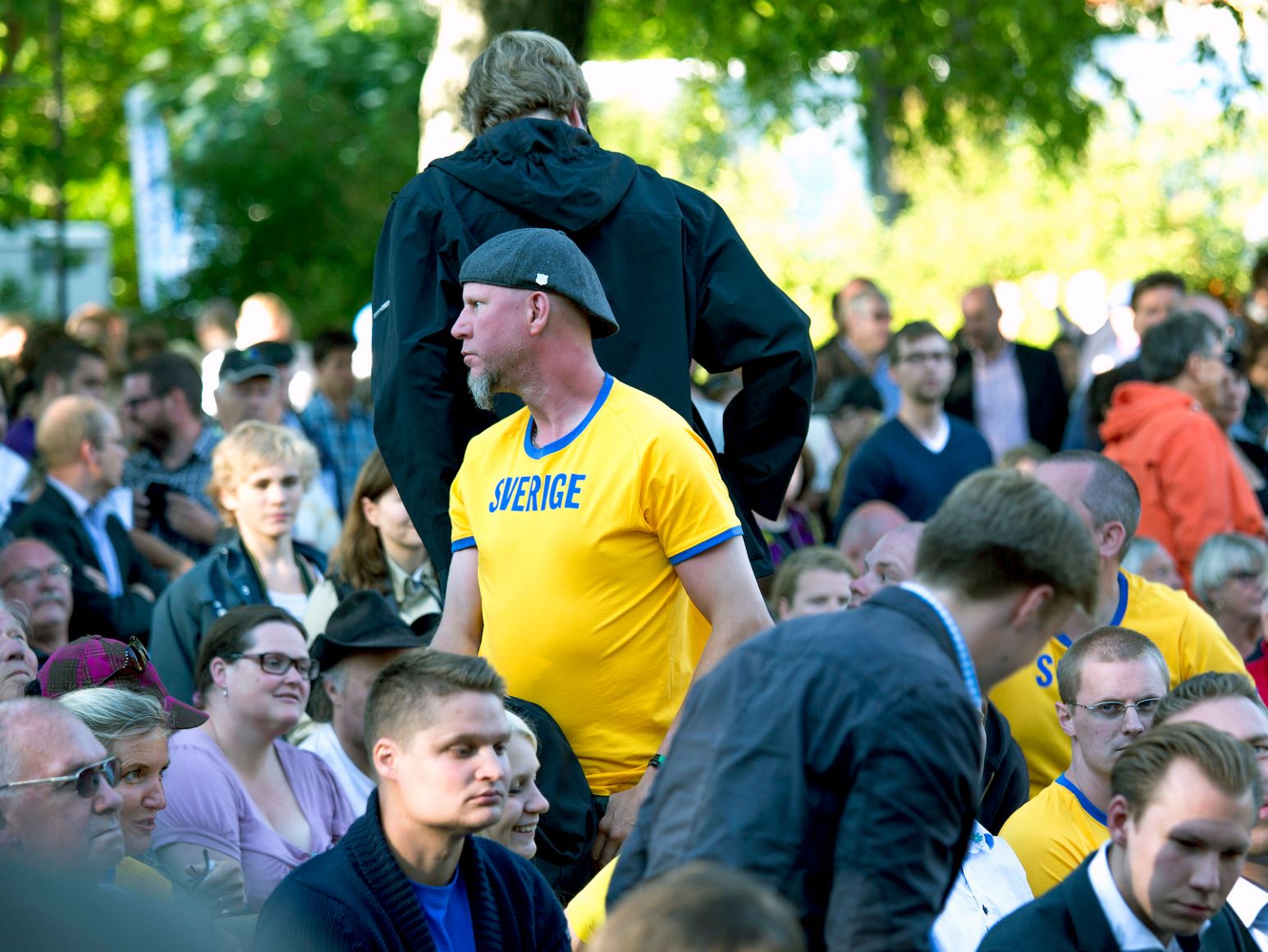
The crowd at a Sweden Democrats event in 2013. News Oresund / Flickr
The sociologist Walter Korpi once quipped that “the revolution will not come to Sweden through armed struggle but by consulting all concerned parties.” He meant to suggest that nothing in Sweden is done hastily or unilaterally, but only through due process and consensus. For a long time, this held true. Sweden has had long periods of stability, mostly ruled by the Social Democratic Party (SAP) mounting gradual reforms.
But Sunday’s election suggests a different picture. Amid the decline of the center-left and the rise of the far-right Sweden Democrats, no party or coalition can expect to win a majority. The vote will likely be followed by days of frantic maneuvering to construct a stable government that can limit far-right influence.
For the last four years, Sweden has been governed by a minority coalition between the Social Democrats and the Greens, which has depended on the Left Party’s external support to help pass its budgets. But the long-term tendencies that produced this weak administration have deepened further.