AMLO’s Time Has Come
It took Andrés Manuel López Obrador twelve years to become president-elect of Mexico. Now comes the hard part.
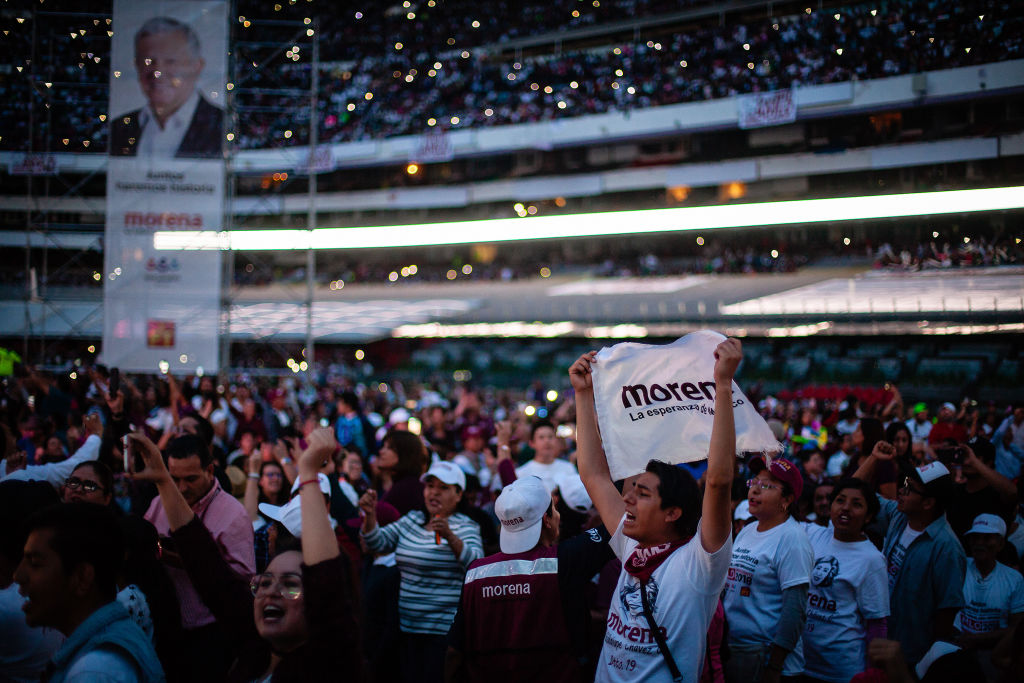
AMLO supporters at Azteca Stadium on June 27, 2018 in Mexico City, Mexico. Manuel Velasquez / Getty Images
Andrés Manuel López Obrador’s sweeping victory in Mexico’s July 1 general elections came as no surprise, but the absolute majority won by his Movimiento Regeneración Nacional (MORENA) party and its allies in the congressional contests was hardly a foregone conclusion. In an electoral landslide, López Obrador, popularly known as AMLO, pulled in 53 percent of the popular vote. AMLO’s win on Sunday contrasts with his presidential bids in 2006 and 2012 when his competitors barely eked out dubious wins over him.
Trailing AMLO with just 23 and 16 percent of the votes, respectively, were Ricardo Anaya and José Antonio Meade. Anaya ran under a coalition led by the Partido Acción Nacional (PAN), and Meade hails from the Partido Revolucionario Institucional (PRI), which led Mexico for seventy-one years in a quasi one-party system until 2000 and again under current president Enrique Peña Nieto (2012–18).
Shortly after midnight on July 2, AMLO delivered a victory speech that made clear his number one priority would be the country’s poor: “For the benefit of everyone, the poor come first,” he declared. At the same time, he suggested that his government would avoid clashes with economic and possibly political elites. Along these lines, he recognized the media for its “professionalism” during the 2018 electoral campaign, in contrast to its “transmissions for a dirty war” during the two previous elections. Similarly, he acknowledged Peña Nieto for his democratic behavior during the election cycle, in contrast with the other campaigns AMLO has run.