Six Takeaways From the Turkish Elections
Erdoğan might have triumphed in the Turkish elections, but there are still glimmers of hope amid the despotism and repression.
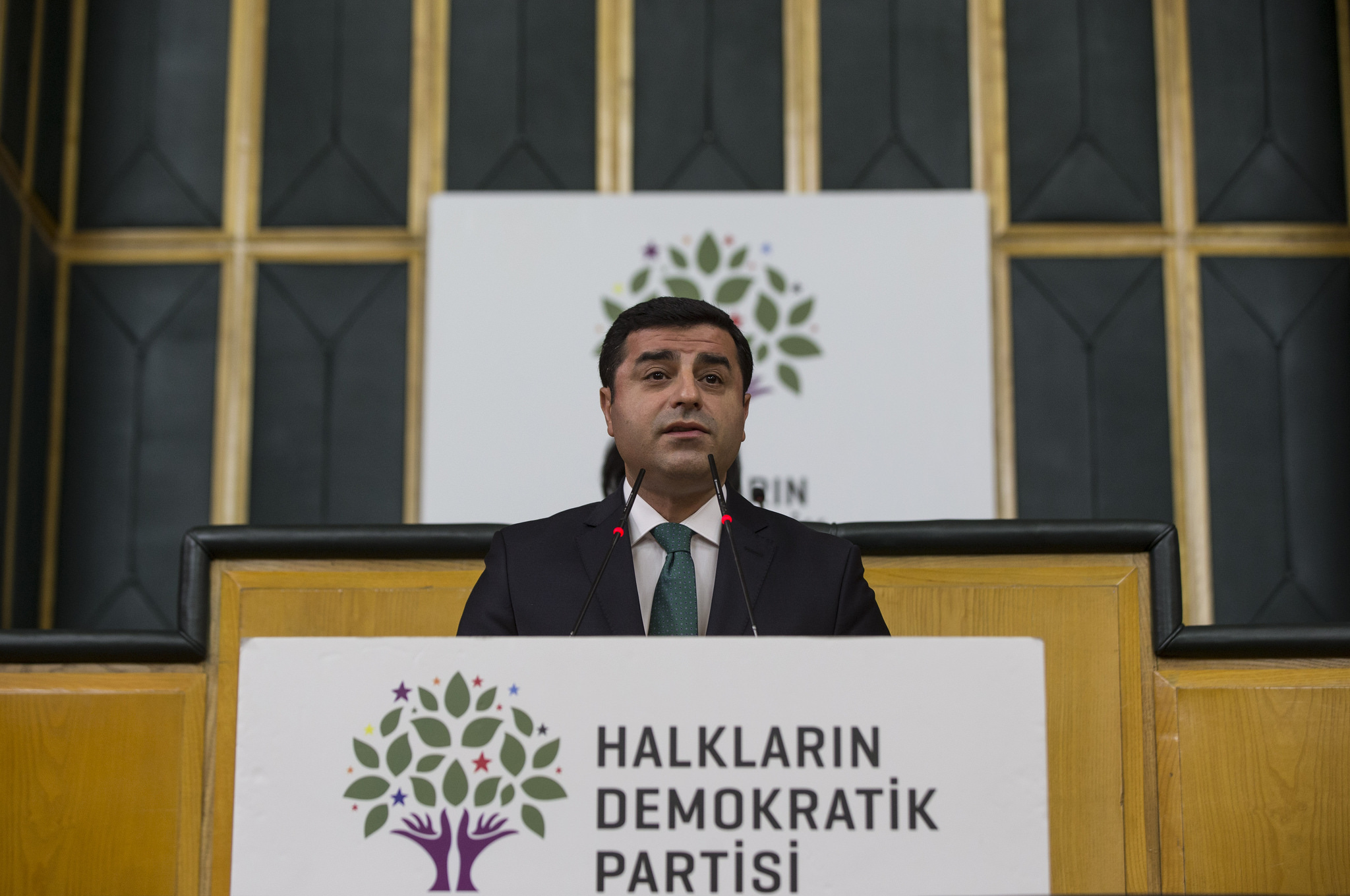
The HDP’s Selahattin Demirtaş speaking in 2016. Halkların Demokratik Partisi / Flickr
The elections last Sunday in Turkey — both parliamentary and presidential — ended in what appeared to be a resounding triumph for President Recep Tayyip Erdoğan, the increasingly despotic leader. While at times it seemed that the opposition had a serious chance, in the end the results were clear. Erdoğan won the presidential election in the first round, and the People’s Alliance, the electoral pact of Erdoğan’s Party for Justice and Development (AKP) and the fascistic National Movement Party (MHP), captured the majority of seats in parliament.
According to preliminary results, Erdoğan won the presidential race with 52.6 percent of the vote, while his main rival, Muharrem İnce, the candidate for the centrist Republican People’s Party (CHP), was able to muster 30.6 percent. In the parliamentary election the People’s Alliance garnered 53.7 percent, while the Nation Alliance (comprised of the CHP, the nationalist Good Party, and the religious-conservative Felicity Party) captured 33.9 percent. The People’s Alliance will have 344 out of the 600 seats in parliament, an absolute majority, while the Nation Alliance will have just 189 seats. The Peoples’ Democratic Party (HDP), an unaligned pro-Kurdish leftist party, won 11.6 percent of the vote and will get 67 seats in parliament.
Those are the raw numbers. But what does it all mean? Here are six takeaways from the elections.