The Fall of Afrîn
Turkey has toppled the Kurdish-held city of Afrîn. But Erdoğan’s drive to crush the Kurdish liberation movement could backfire.
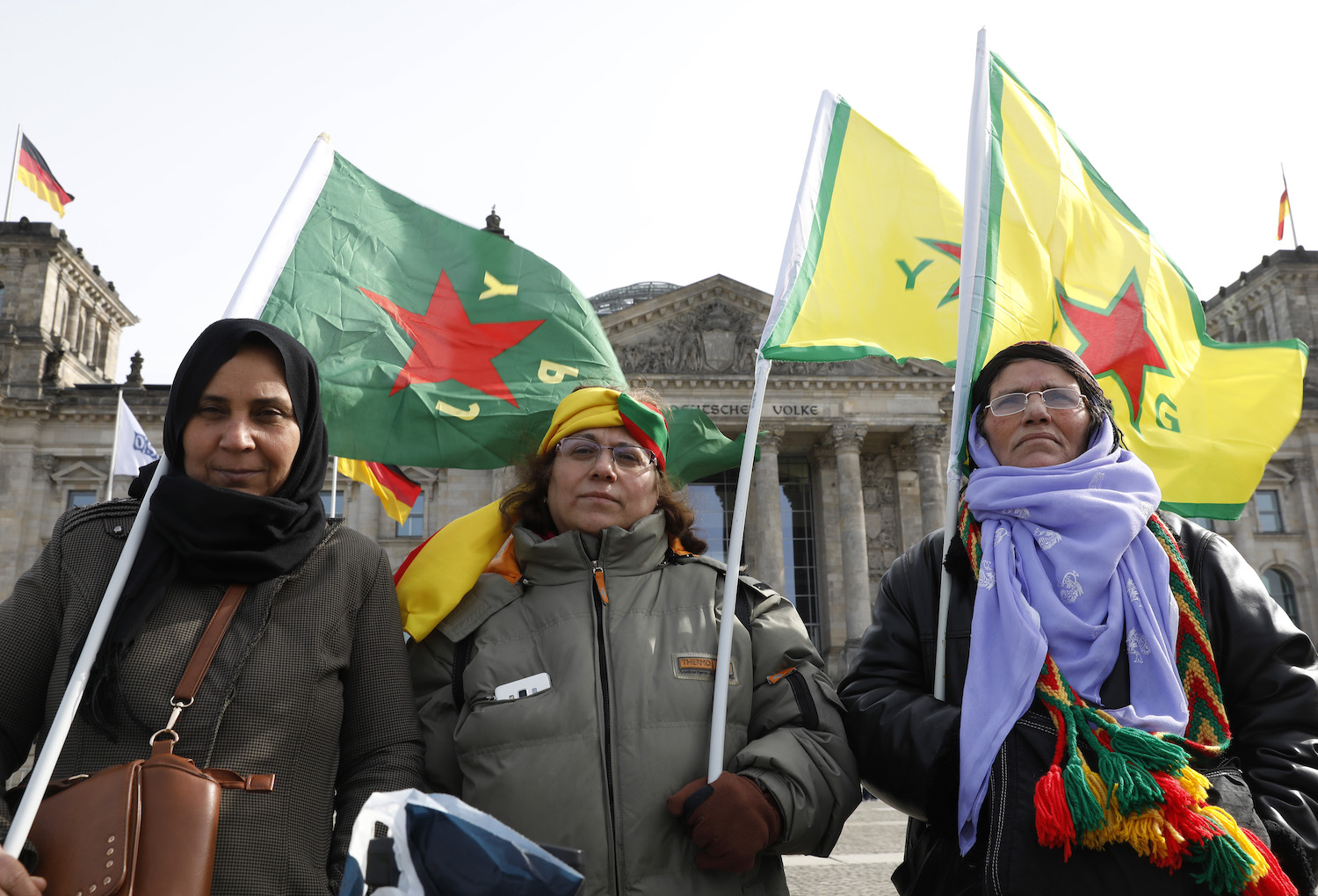
Demonstrators in Berlin protest the Turkish military invasion of Afrîn on Wednesday. Michele Tantussi / Getty
On January 20, the Turkish military launched its invasion of the Syrian-Kurdish canton of Afrîn in northwest Syria. On March 18, after intense battle in which the heavily armed Turkish army was supported by air attacks and forces associated with the Free Syrian Army, it seized control of the Afrîn city center.
It has long been Turkey’s policy to encircle Afrîn and separate it from the other two cantons of Rojava (Kobanê and Jazira), where the Kurds — long stateless and long oppressed — had carved out a space of political autonomy. Turkey’s 2016 “Operation Euphrates Shield” aimed at (and mostly succeeded in) clearing the area between Kobanê and Afrîn and blocking unification and logistic lines. “Operation Olive Branch,” the cynical name of the latest operation, seeks to further frustrate the Kurds’ hopes for independence.
Whether the offensive will mark a turning point is uncertain. But what’s clear is that the recent developments will have significant implications, both for Turkish leader Recep Tayyip Erdoğan’s despotic aspirations and for Kurdish dreams of national liberation.