Gentrifying the Los Angeles River
Once marginalized by the city’s elite, LA’s riverside neighborhoods are now facing revitalization — and displacement.
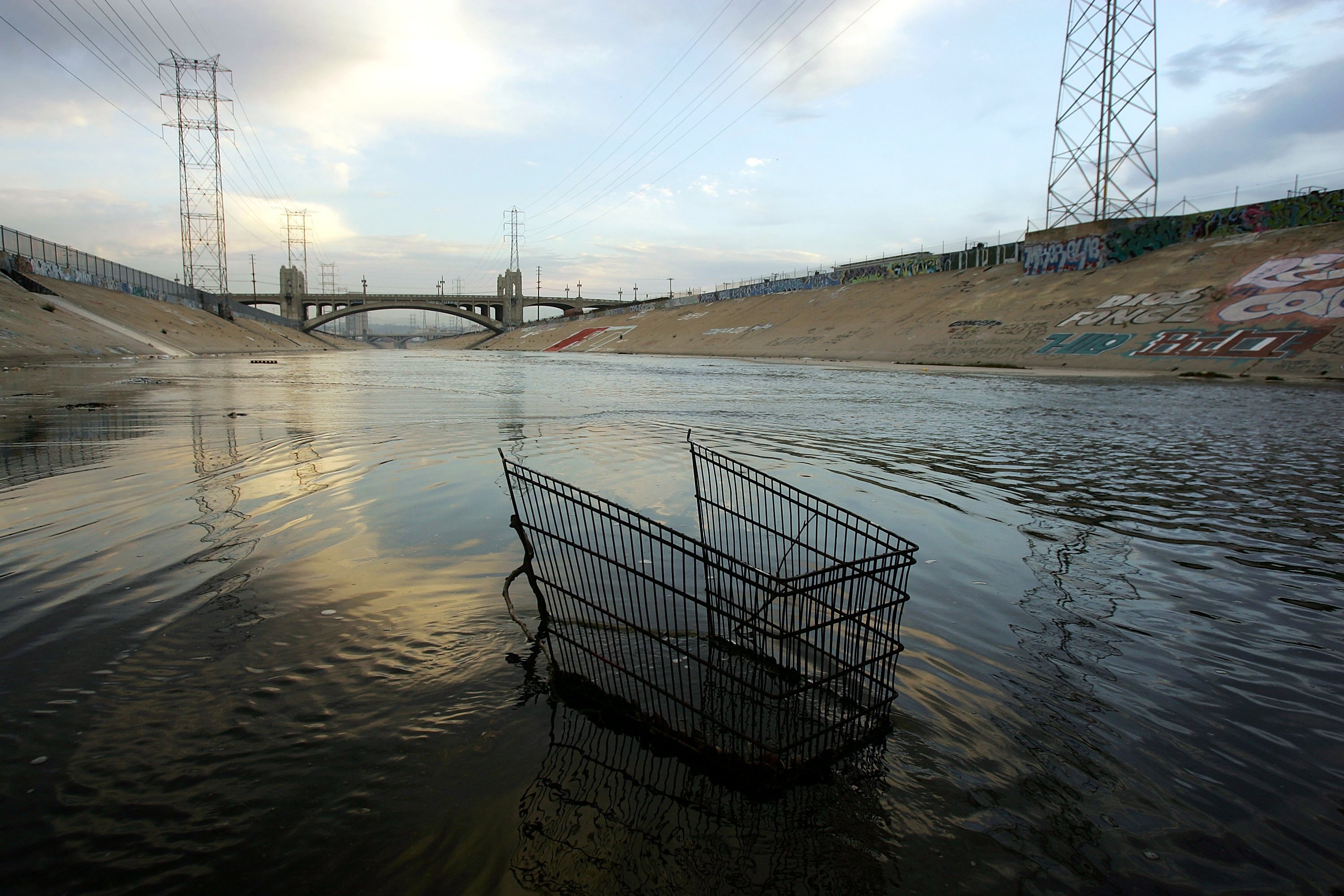
A shopping cart is seen in the Los Angeles River in the early morning hours on April 21, 2006 in Los Angeles, California.David McNew / Getty
From its modest start in the Santa Susana Mountains to its end at the Western reach of the San Fernando Valley, the Los Angeles River spans forty-eight miles. The thirty-two miles that cut through the heart of Los Angeles and its surrounding cities — made famous by such movies as Grease and Terminator 2 — resemble a massive war trench made of concrete. In 2007, after decades of lobbying by community groups, environmentalists, and artists, the City of Los Angeles in collaboration with the Army Corps of Engineers approved a $1.3 billion master plan that will reimagine an eleven-mile stretch of the river, transforming it from a gash on the cityscape to a beautified urban sanctuary.
As the city celebrates the start of the project, some of the activists who originally championed the revitalization of the river fear that it has become a Trojan horse for gentrification. Sissy Trinh, the Vietnamese-American founder of the Southeast Asian Community Alliance (SEACA), said that she “recognizes the need for green infrastructure projects like the LA River restoration, but the practical reality is that these types of projects are profit-making opportunities for mega-developers who are creating a speculative economy in our impacted communities.”
As a grassroots organization, SEACA’s focus is centered around youth-based organizing and policy advocacy in underserved LA neighborhoods such as Chinatown, Lincoln Heights, and Solano Canyon. Most of those community’s residents live slightly above or below the poverty line and are majority people of color who also happen to share an uneasy and often antagonistic relationship with the rapidly changing LA River waterfront. Because of the rising rate of homelessness in the communities it serves, SEACA now describes its work “as dealing with the issues of gentrification, displacement, AND homelessness prevention.”