The Politics of Survival
Puerto Rico’s left is rebuilding in the wake of two disasters: Hurricane María and a neoliberal onslaught.
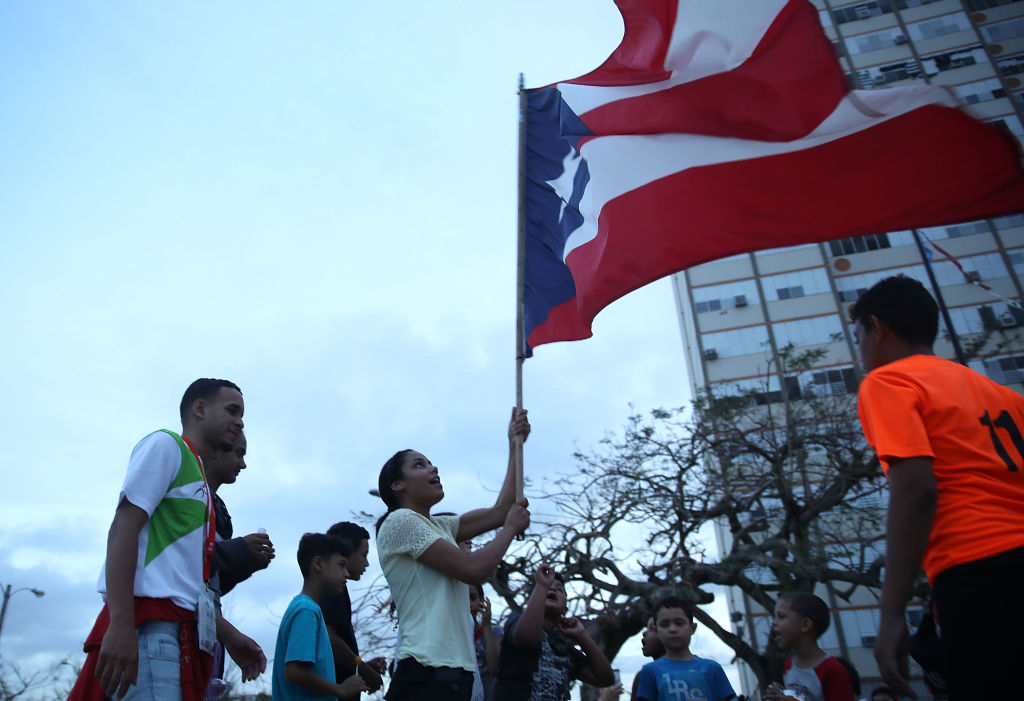
A Puerto Rican flag is waved outside the Torres de Francia complex as people deal with the aftermath of Hurricane Maria on October 1, 2017 in San Juan, Puerto Rico.Joe Raedle / Getty
Puerto Rico’s left-wing forces have long tried to unify, a goal that has proven difficult to reach and even harder to sustain. At its strongest, the Left has faced intense repression from both the United States and the island’s colonial government. Yet, activists and left-wing intellectuals agree that deeper differences account for the collective inability to build unity.
Historically, left-wing forces in Puerto Rico have split over the national question. Pro-independence groups, arguably the largest sector, have prioritized decolonization while socialists, feminists, and environmentalists have proposed a broader anti-oppression praxis centered on social and economic issues. Other groups, such as the Movimiento Socialista de Trabajadores, do not see these struggles as mutually exclusive, calling for the formation of a socialist republic in Puerto Rico.
Today a new wave of leftist organizing is emerging, one free from traditional Marxist or nationalist dogmas. This new Puerto Rican left is organizing for economic justice and against colonialism while putting a greater emphasis on gender, sexuality, and race. It aims to foster young leadership, articulate new solidarities, and revive the practice of community organizing. It is learning from the errors of the past while picking up the sediments of previous struggles.