Those Who Study and Those Who Know
Elena Ferrante’s Neapolitan series refuses to simplify the systems of capitalist and patriarchal domination it describes.
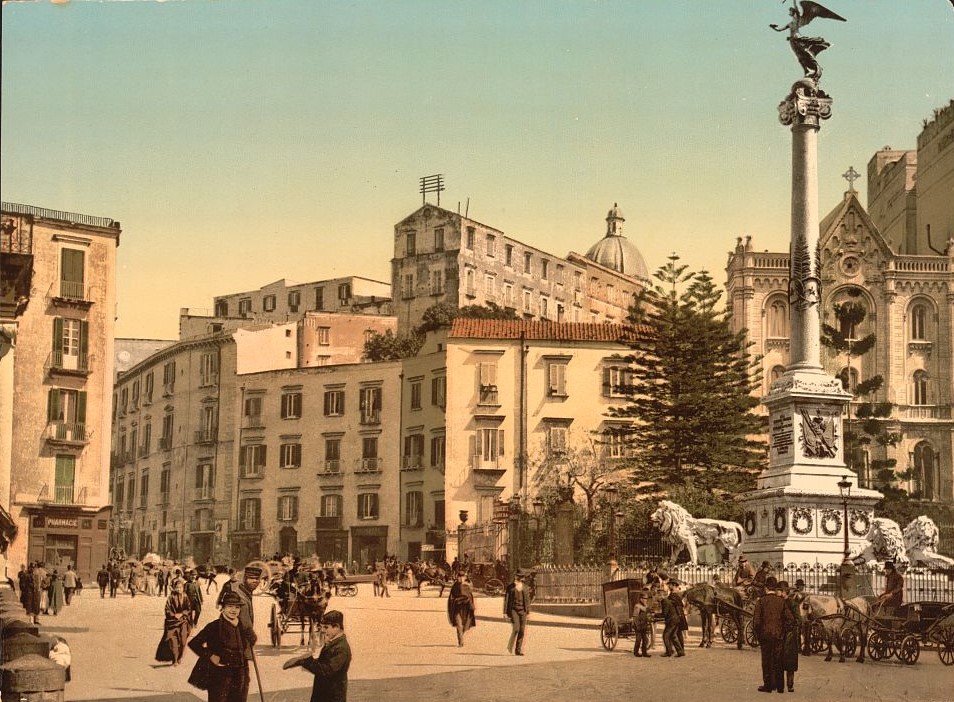
1900-era Piazza dei Martiri, in Naples, Italy, one of the locations to which Elena Ferrante’s characters frequently return.Library of Congress / Flickr
Elena Ferrante’s Neapolitan novels have found a wide audience, from those who, like many of Ferrante’s characters, have little formal education to those so ashamed to be seen reading the deliberately “vulgar” covers that at least one store began selling the books in brown paper bags. But those fiercely debated images capture something essential about the sweeping, four-novel series: Ferrante’s books lend themselves to popular organizing while also challenging the hyper-educated left to examine long-held beliefs and practices.
The series focuses on subjects not typically depicted in literature: female friendship and poverty. The first novel, My Brilliant Friend, introduces us to the main protagonists, lifelong friends Lila Cerullo and Elena Greco (who narrates), and the impoverished neighborhood in Naples that shapes their lives. But the series also takes on larger topics, from economic theory, history, philosophy, and art to labor unrest, gender roles, fascism, and communism.
In shifting between the details of Lila’s and Elena’s lives and these broader concerns, Ferrante demonstrates that the micro and the macro cannot be divorced. Her approach fits two of the books’ main subjects: class conflict and misogyny. It almost seems as if Ferrante wants to show her readers that the long-standing arguments that set class apart from identity, or that try to argue that one is only a function of the other, have been wrong-headed from the start. Her novels demand that we contend with how each system contributes to the production and maintenance of the other. Above all else, the Neapolitan series resists simplifications, just like the systems of capitalist and patriarchal domination it uncovers.