The Moral Economy of the Iranian Protests
Beset by inequality and corruption, Iran’s provincial working classes are revolting against the revolution’s broken promises.
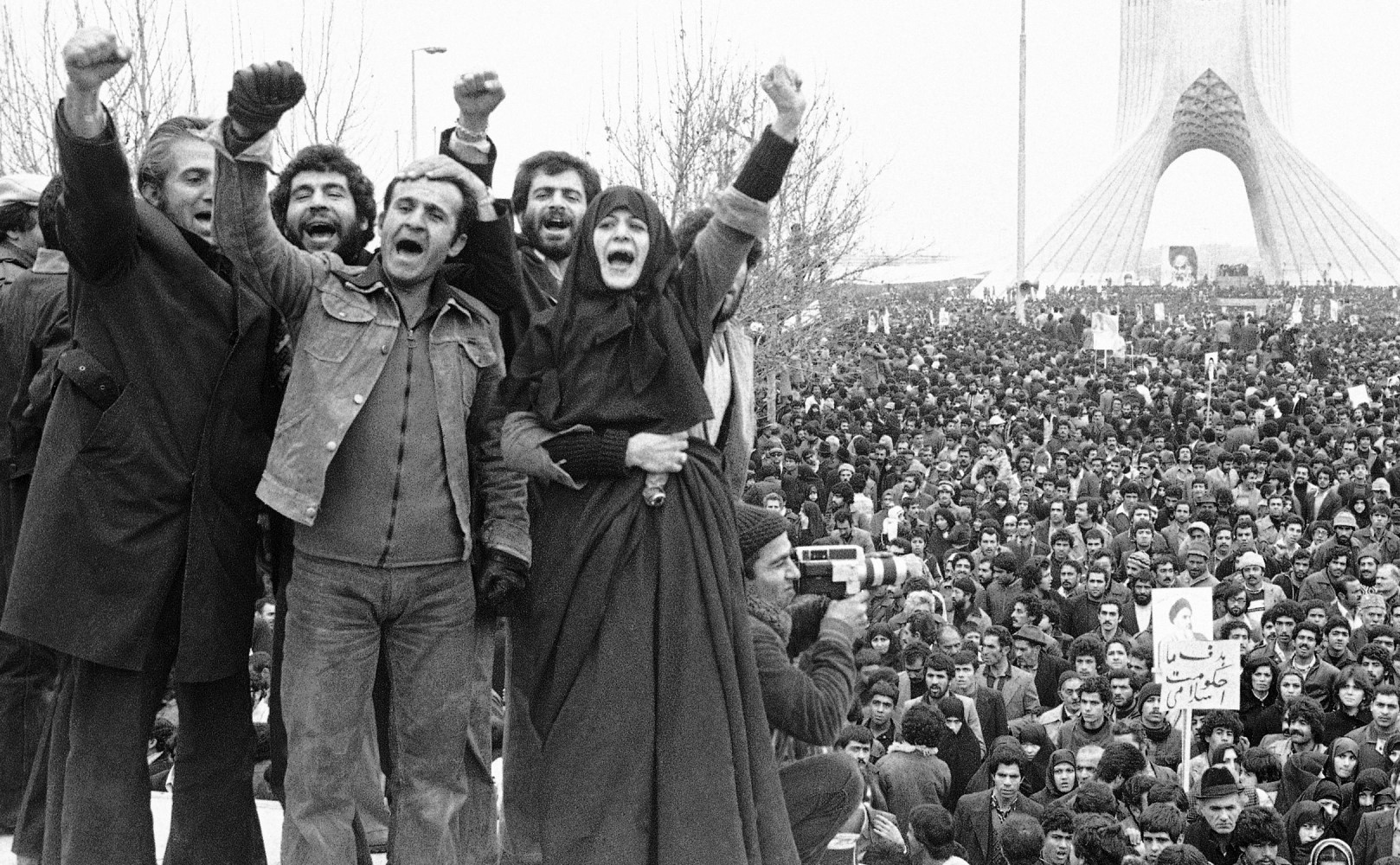
Protesters around Shahyad Tower (later Azadi Tower) in Tehran, Iran, 1979.Aristotle Saris / Wikimedia
The recent demonstrations in Iran have been noteworthy for their geographic scope and range of grievances. Triggered by discontent over persistent unemployment and inflation, long overdue wages and pensions, the reduction of cash subsidies, environmental degradation, and the collapse of murky financial institutions that turned out to be Ponzi schemes, the protests have been taking place primarily in provincial towns. At their core, these protests are a moral outcry of the marginalized periphery against what it perceives to be a callous center and its betrayal of the social justice vision that animated and united the revolutionary forces of 1979.
Local dissent has been a regular and widespread feature of Iranian politics, especially since the end of the Iran-Iraq War in 1988. Yet, these receive little attention in the Western media, which focus instead on the views of the Supreme Leader, factional rivalries among elites, and the nuclear program. Even a cursory glance at the Iranian press in the past three decades reveals a constant current of protests by teachers, nurses, bus drivers, industrial and agrarian workers, conscripts, students, pensioners, and others over broken promises and work conditions. They persist despite being dealt with harshly by the authorities.
These citizens are not all poor, propertyless, or uneducated, but they have been suffering from high youth unemployment, a housing market disfigured by speculation, relaxed labor regulations, and the general inability to live the life promised by their educational status or even to match their parents’ standard of living. Because the Islamic Republic is adept at repressing formal avenues of grassroots representation like functioning political parties, independent associations, and trade unions, these grievances previously remained isolated and contained. Now they have exploded.