Behind the Iran Protests
An on-the-ground report from the protests in Iran, where citizens are torn between anger at their leaders and fears of becoming the next Syria.
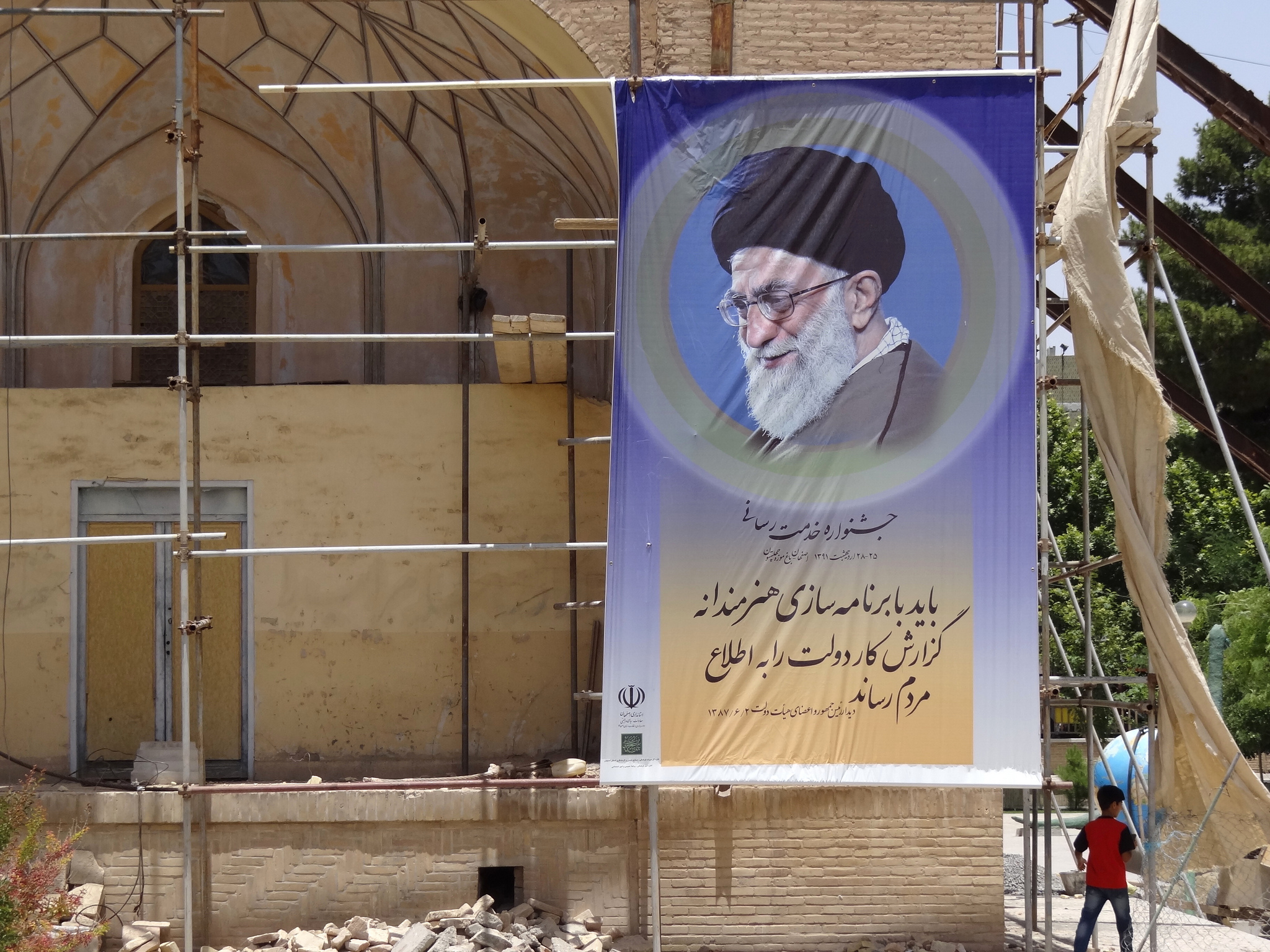
A portrait of Iran’s supreme leader, Ali Khamenei, in Isfahan, Iran. adam_jones / Flickr
“I’m in university now, but I know it’s a waste of time. I won’t have a job after this. I wouldn’t have a job if I didn’t go to university. I’m just waiting out four years. But there’s no future for me . . . for any of us.”
Mohsen is a twenty-year-old protester in the city of Karaj, about twenty-six miles to the west of Tehran. His mother is a homemaker and his father a small business owner. His older brother, Ali, a twenty-five-year-old mechanical engineer, is unemployed. “Ali has a girlfriend and they want to get married. But where are they going to live? At my parents’ house with all of us there? His girlfriend’s family is also a big one and they live in an apartment, so Ali can’t move in there. Ali is much smarter than me, and if he can’t get a job, then I definitely can’t. That’s why I’m protesting. What future do I have to live for?”
Mohsen’s father, Hossein, a veteran of the 1980-88 Iran-Iraq War, receives a pension and owns a small business with his brother. They live in a three-bedroom apartment in Karaj that Hossein bought before his sons were born. They’re not poor, but “we are living month-to-month. Everything is so expensive now. Especially groceries. We’re lucky that we don’t pay rent. I don’t know how those who pay rent live in this economic environment.”