The Bureaucratic Nightmare of Incrementalism
America’s patchwork system of social services makes it hard to care for ourselves.
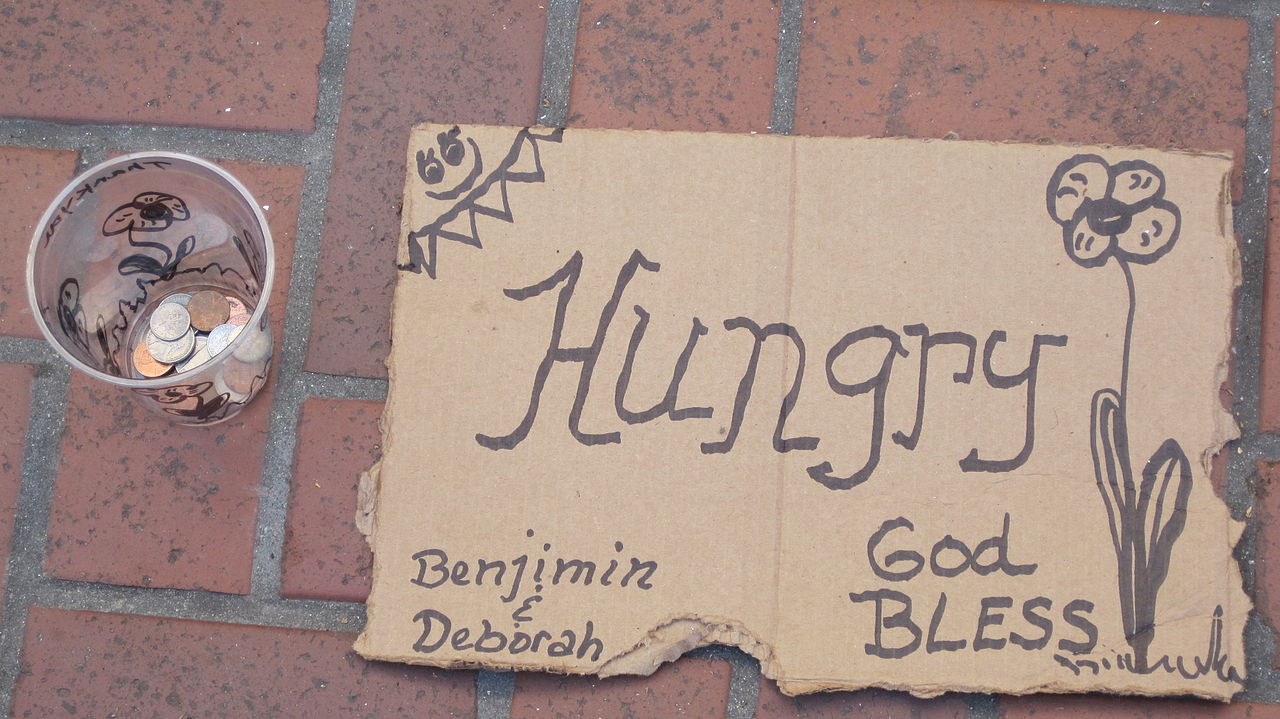
A panhandling sign in San Francisco, California, March 14, 2010.BrokenSphere / Wikimedia
In 2006, the New Yorker ran a story about a man nicknamed Million-Dollar Murray, a military veteran and a homeless alcoholic who came into contact with social service providers on a daily basis. The city of Reno, the article showed, was paying far more in social services expenditures to keep Murray on the street than it would to simply house him — that is, it cost more money to manage the problem than to solve it.
One major reason why Murray’s situation was so expensive for the city is that he went to the emergency room several times a week. The United States Interagency Council on Homelessness estimates that the state spends $30-50,000 per unsheltered person per year, vastly more than most people pay in rent. Emergency room visits make up a huge share of that cost, since people living without shelter are three times more likely to visit the ER, and well under ten percent of homeless people who visit the ER have private insurance. It’s actually less expensive to spend public money on shelter instead — and meanwhile, people who receive shelter see significantly better health outcomes, which can help them attain overall stability.
Some cities and states have recently acknowledged this calculus. Salt Lake City’s enormously successful Housing First initiative has reduced chronic homelessness in the city by 91 percent by providing housing to homeless people without requiring proof of employment, treatment, or counseling — the principle being that housing comes first, making other services easier to administer. Houston, too, has seen major improvement in both homeless people’s health outcomes and the city’s budget with its Integrated Care for the Chronically Homeless program, which uses Medicaid funding to provide permanent supportive housing units to homeless people who make at least three emergency room visits over two years.