How Washington Hacked Mongolia’s Democracy
When the US intervened in Mongolia's elections, they did a lot more than leak emails.
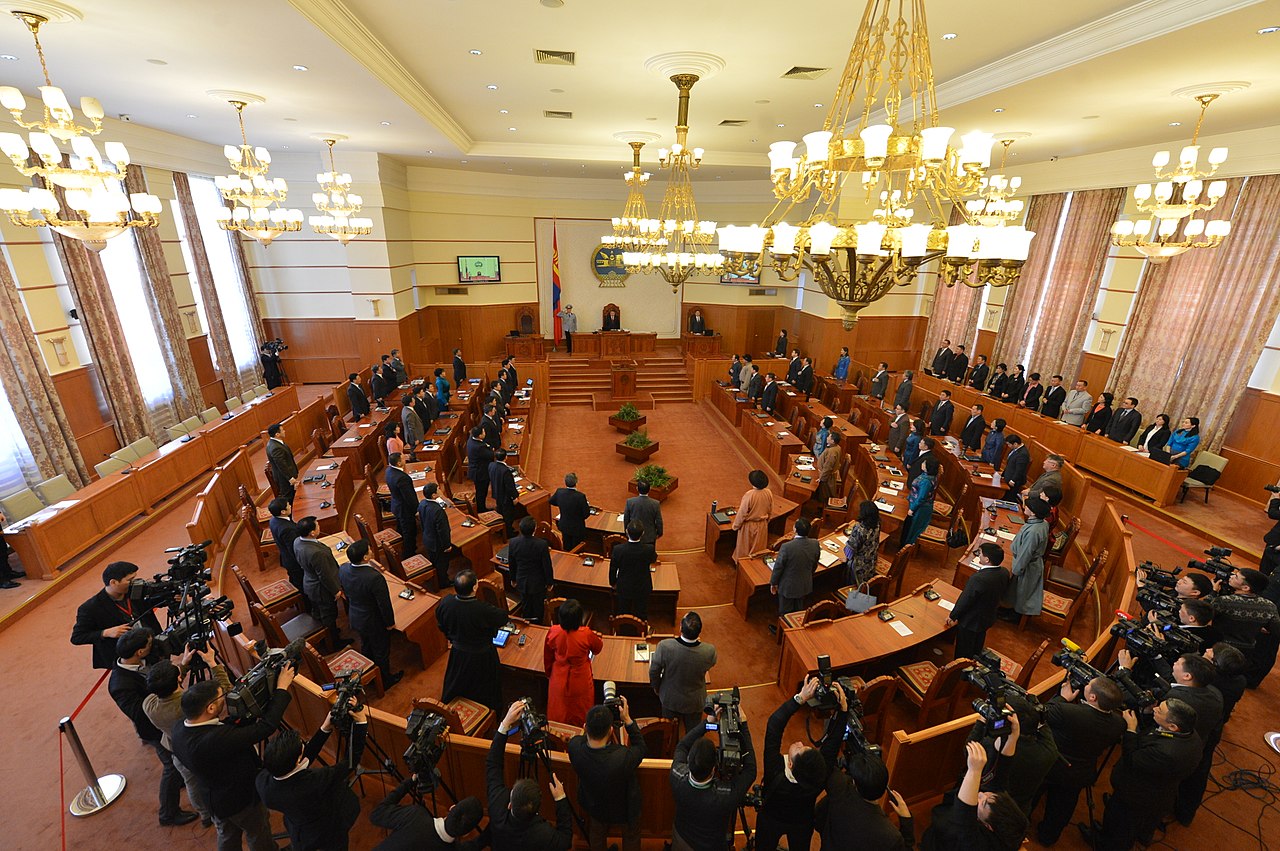
Mongolian parliament members in the government palace on March 19, 2014.Nomuun / Wikimedia
For the past year, the media has been obsessed with the prospect that Russia might have meddled in the 2016 election to help elect Donald Trump. From the tone of the discussion, you’d think Russia sent a squad of operatives to provide training, strategy consulting, and campaign advice to a political opposition over a period of years.
No one has alleged Russia actually did that. But it is something the US government did in the 1990s.
Many people are familiar with the Clinton administration’s efforts to give then-Russian president Boris Yeltsin a much-needed — and decisive — boost in the country’s 1996 presidential election. Fewer are aware that from 1991 to 1996, US political operatives, funded by the federal government and directed by an influential senator, played an active role in bringing Mongolia’s right-wing opposition to power, a move that would prove as much a disaster to ordinary Mongolians as it would a boon to US government and corporate interests. The incident is so little-remembered today, it’s not even listed in Carnegie Mellon University political scientist Don Levin’s otherwise exhaustive list of superpower meddling in foreign elections.