No Future
The only future made possible by Blade Runner 2049’s final scene is more and more Blade Runners.
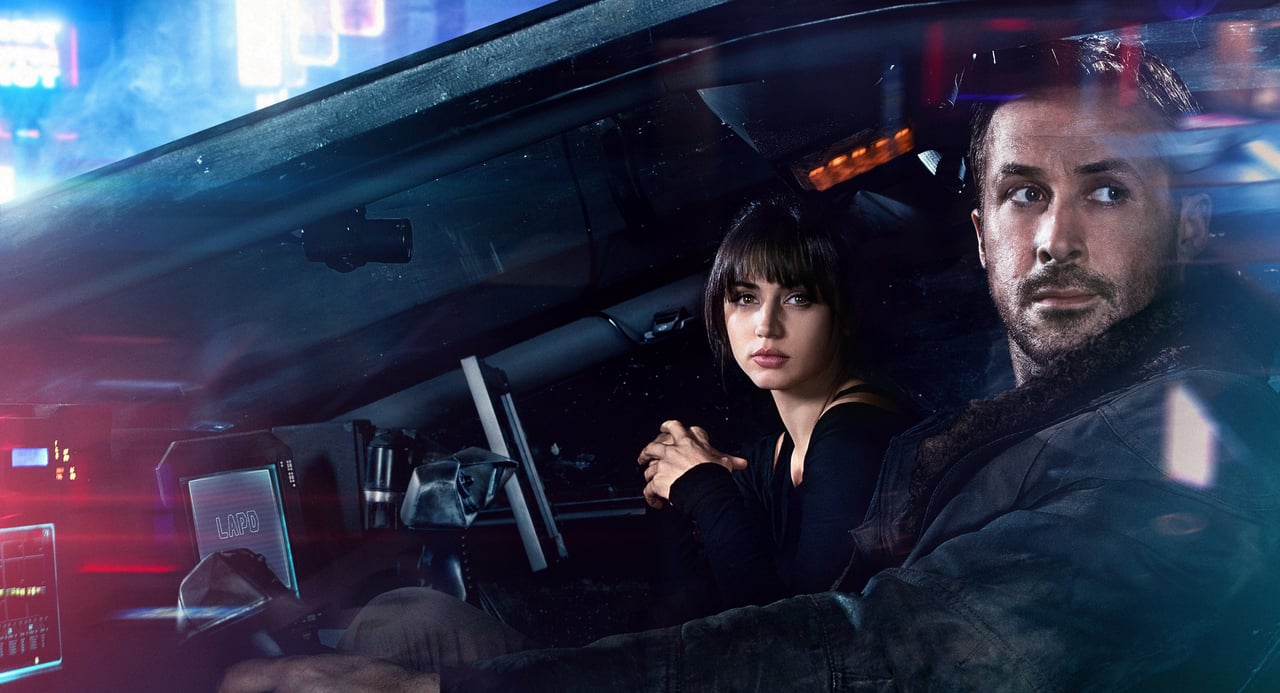
Still from Blade Runner 2049.Vimeo
What does a world after climate catastrophe look like? The opening of Blade Runner 2049 offers one answer: K (Ryan Gosling), a bioengineered being — a replicant, in the franchise’s terminology — charged with hunting down and “retiring” older models, dozes off as his self-driving vehicle flies over a stunning landscape of latticed terraces. It’s a feast for the eyes, to be sure, but when he lands, we learn that the land only cultivates worms — like a corpse.
Other images overwhelm viewers with their stark beauty — the vivid orange air that permeates Las Vegas, Los Angeles’s glittering cityscape, a lone, dead tree on the protein farm, snowflakes that melt on K’s hand. The towering female sex sculptures and the holographic ad for Joi, a computerized housewife, provide pornographic fascination. Dig beneath these enrapturing surfaces, however, and you discover that the world of Blade Runner 2049 is barren.
This sterility contrasts with the importance the movie places on reproduction. Picking up thirty years after the original, Blade Runner 2049 follows K as he investigates the child of Rick Deckard (Harrison Ford) and Rachael (Sean Young). Since at least one member of that couple is a replicant, their daughter seems like a technological impossibility. Her very existence offers new hope for the nascent rebellion as well as for industrialist Niander Wallace (Jared Leto), who yearns to develop a self-reproducing android to exponentially grow his workforce.