“We Are The Lions, Mr. Manager”
On this day in 1976, a group of Asian immigrants in London began a strike that would define an era.
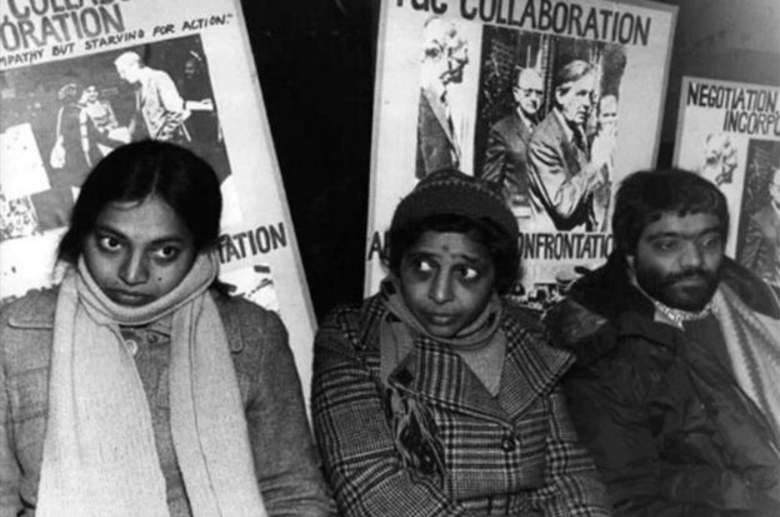
Yasu Patel, Jayaben Desai and Johnny Patel during the Grunwick Strike. (Image: Getty)
Britain in the 1970s was awash with strike action, as an emboldened trade union movement responded to a deep economic crisis. From coal miners to truck drivers, public sector workers to gravediggers — it seemed that every sector of the economy would be impacted by the wave of national unrest. But the unlikeliest of strikes took place in northwest London, at the Grunwick film processing factory. There, in August 1976, a group of mostly immigrant women from south Asian descent came out on strike against poor conditions, victimization and degrading treatment from a bullying management.
The strike, which dissipated after two years of militancy, foreshadowed what was to come in Thatcher’s Britain. The policing was vicious, with over 550 arrests of trade unionists during the dispute, the highest number since the General Strike fifty years earlier. The Conservative Party saw it as a key moment — an opportunity to discipline both immigrants and workers. Hardline right-wingers in the party paid the legal fees of the employer, and shadow cabinet ministers plotted to crush the strike as a means of unravelling the postwar social-democratic consensus.
But Grunwick was also one of the most impressive demonstrations of class solidarity in modern British history. The determination of the strikers and their supporters inaugurated an era where working-class struggles would be more multi-racial and more militant.