Serving the People
Our organizing can't just speak to the everyday crises of people's lives under capitalism. It has to intervene in them.
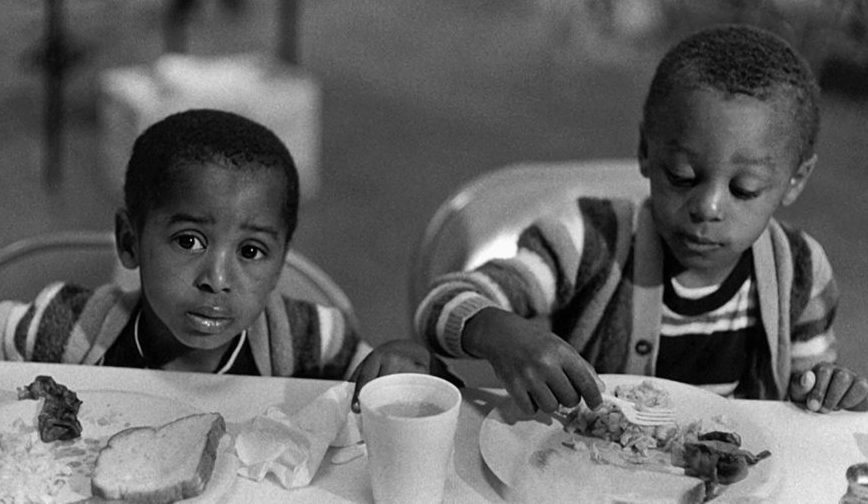
Two children eat at a Black Panther free breakfast program. PBS
Housing is an intimate need. Having a home offers a basic possibility of stability, a space to retreat to safety and recharge to fight another day; it’s not only a human right but a necessity for resistance. The consequences of a lack of stable housing are often tragic, destroying lives in its wake.
Take Allen Bullock, the Baltimore teenager who famously smashed police car windows with an orange safety cone in the riots following Freddie Gray’s murder. Last week, the Baltimore Sun reported that Allen was sentenced to four years in prison for a parole violation stemming from his conviction after the riots.
Like Freddie, Allen grew up in poverty. He was a foster kid. Allen’s biological mother Bobbi had been convicted for sex work in 2003, and the state removed Allen from the home. Bobbi fought to regain custody of Allen later — no small feat. Yet housing remained a persistent problem for him throughout his childhood. At the time of the riots, Allen was living at a cousin’s house rather than his mother’s.