Resolving the Crisis
- Ian Dreiblatt
Vladimir Putin is presiding over Russia's economic crisis with an iron fist. Can the Left present a viable challenge?
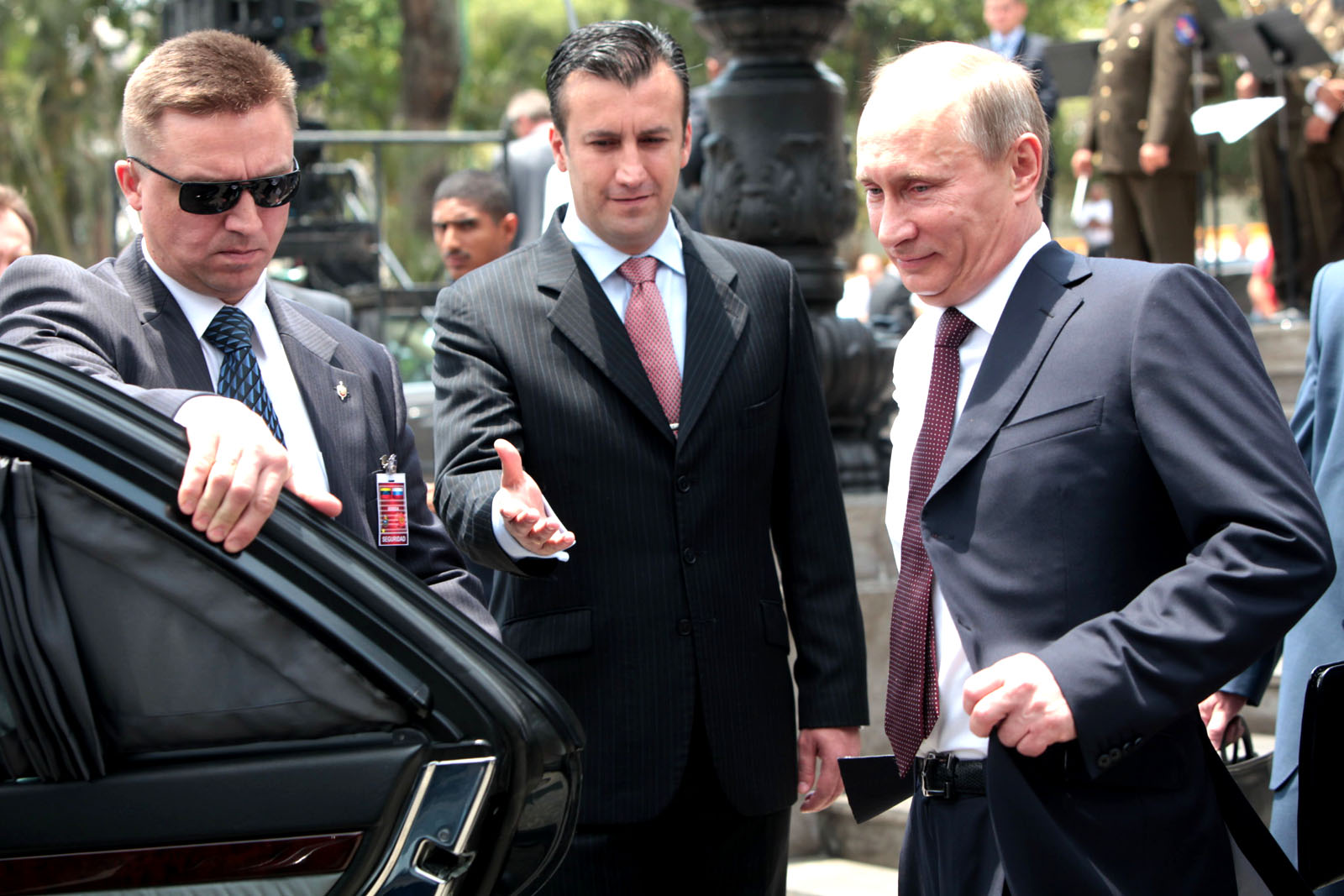
Vladimir Putin in 2010. Globovisión / Flickr
Vladimir Putin’s March 2012 presidential victory redefined what support for his presidency means. In his first two terms, he spoke in somewhat soft terms of “sovereign democracy.” But at the start of his third term, he abandoned his persona of a reasonable technocrat promising economic growth and instead became a charismatic leader around whom the nation must rally in the face of foreign threats and conspiracies.
Putin’s aggressiveness — exemplified by the government’s reaction to the Kiev Maidan uprising, its annexation of Crimea that swiftly followed, and its “hybrid” intervention in eastern Ukraine — have fundamentally altered the relationship of Russians to their president. In this sense, 2014’s events confirmed Clausewitz’s old dictum that war is the continuation of politics by other means. From that moment on, support for the existing government was not a rational choice, but a civic obligation, identical to patriotic devotion to one’s country and its national interests.
Kremlin chief of staff Vyacheslav Volodin put it most clearly: “Putin is Russia: No Putin, no Russia.” In practical terms, this personification allows Putin to rise above everyday politics and become a symbolic father figure.