The Struggle Against the First King Charles Inspired the Republican Tradition
Sycophantic journalists and politicians make it seem as if deference to the British monarchy is the natural order of things. But the country over which Charles III now reigns rose up against his 17th-century namesake to challenge hereditary privilege.
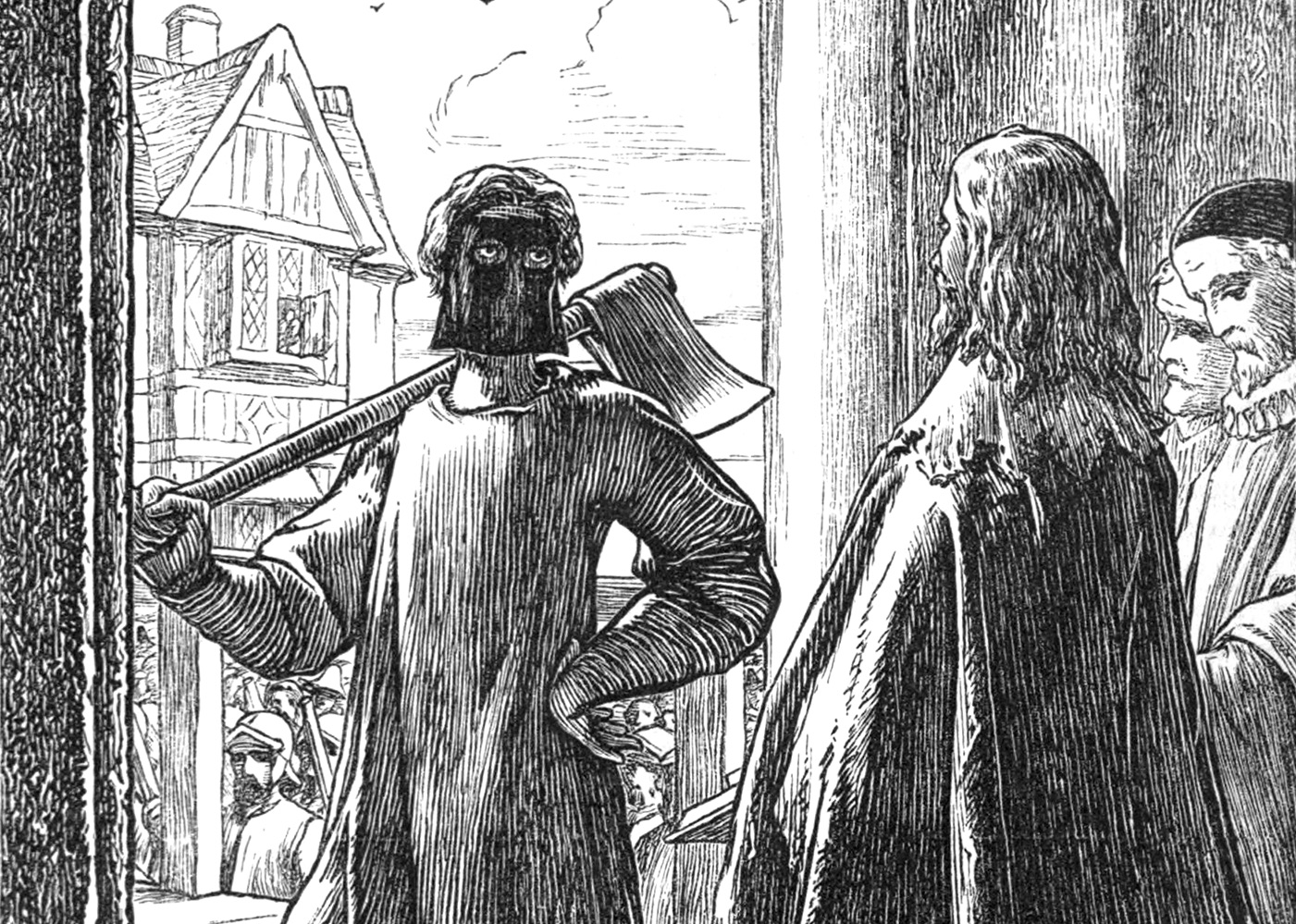
King Charles I awaits his execution in an illustration in an 1864 issue of Once a Week magazine.
Charles I was short — just 5 feet 3 inches in height. But the court-appointed portrait painters made good nature’s deficiencies by rendering him literally larger than life. In his great equine paintings, Anthony van Dyke, for instance, painted the horses smaller than they were to make it seem as if the King sat taller in the saddle.
The BBC and much of the mainstream media in Britain has been engaged in a twenty-first-century version of the same process with the latest Charles to ascend the throne. His perpetual, entirely unconstitutional decades-long meddling in the political process, eccentric (even by royal standards) beliefs, persistent gaffes, and the disastrous conduct of his marriage to Princess Diana are all conveniently forgotten.
But worse than forgetting the recent facts of Charles III’s elongated tenure as Prince of Wales is the historical forgetting. How can it be, for instance, that in the hours-long obsessive TV coverage of his address to both Houses of Parliament, not one commentator thought it necessary to recall that Charles III was sitting at exactly the same place in Westminster Hall where his namesake sat when he was on trial for his life in 1649?