Abolish the House of Lords
No democratic parliament should include hereditary peers or lifetime appointees. It’s time for Britain to abolish the House of Lords.
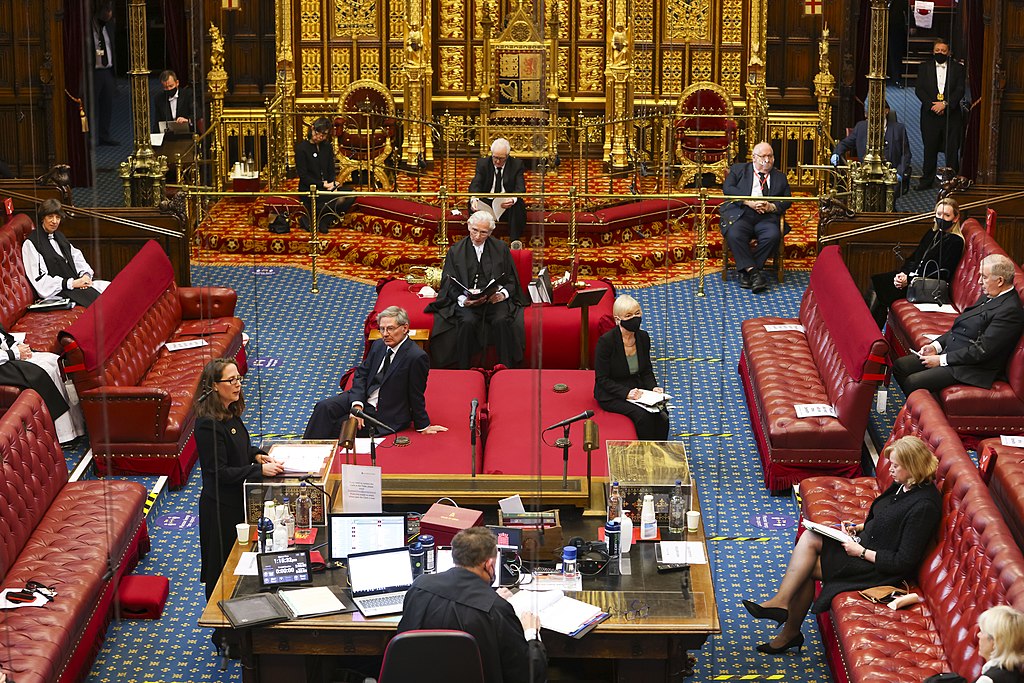
Baroness Evans of Bowes Park speaking during the House of Lords tributes to Prince Philip, Duke of Edinburgh, on April 12, 2021. (Roger Harris / House of Lords 2021 via Wikimedia Commons)
When justifying the House of Lords in The English Constitution (1867), Walter Bagehot thought it one of the “dignified” aspects of the British system. After all, he wrote, although unelected, “an old lord will get infinite respect.” Having an aristocratic chamber prevented “the rule of wealth.”
It is safe to say this has not aged well. It’s not just that we are stuck with the aristocracy — ninety-two hereditary peers remain in the Lords. Recent history shows there is a strong correlation between donating £3 million to the Conservative Party and being ennobled: “rule of wealth” indeed. The open sale of positions in our outdated second chamber naturally raises questions about its future.
There seems to be a consensus among the liberal and social democratic left that the Lords should be reformed. Proposals include moving to an elected Lords, its abolition and replacement with a senate, or a move to a citizen jury model. Any of these would represent an advance, as would a single, truly democratic chamber.