John Milton’s Paradise Lost Mourned a Revolution Betrayed
John Milton died 350 years ago, leaving behind Paradise Lost, a poem composed in a state of deep despair. Blind, alone, and reeling from the failures of the English Revolution, Milton wrote an epic reflection on political defeat and the possibility of hope.
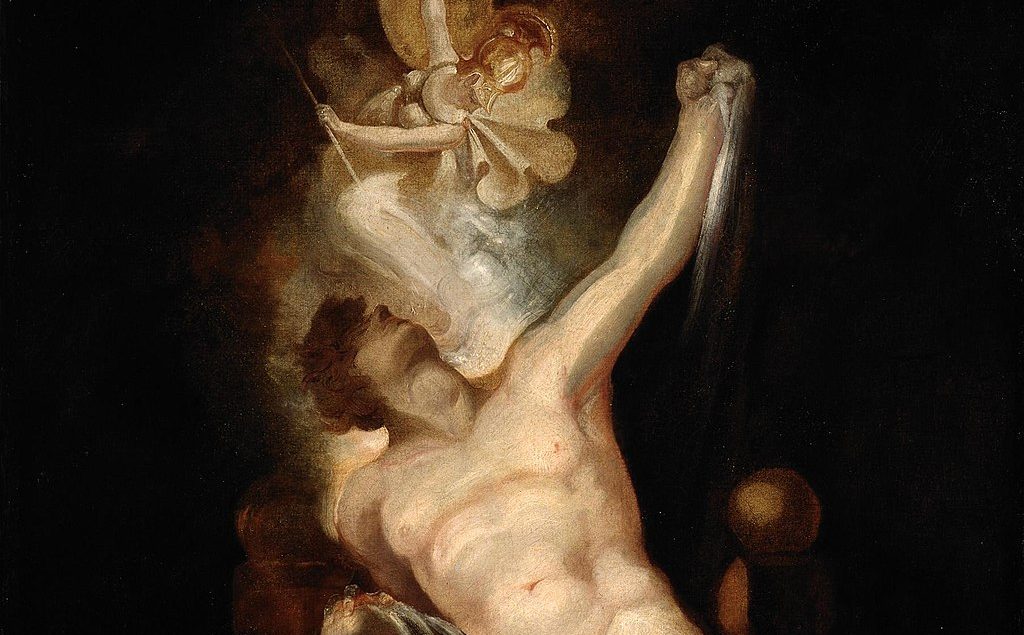
Johann Heinrich Fuseli’s late eighteenth-century illustration of a scene from Paradise Lost. (Wikimedia Commons)
“In the dark times / Will there also be singing?” asked Bertolt Brecht in 1939. The answer, of course, is yes: “There will also be singing / Of the dark times.” Why has poetry been so important in periods of political defeat?
This is a question I thought about often during Donald Trump’s first presidency, and which comes up again now. It was common then for people to say we were living in dark times, as it no doubt will be in the months and years to come. I had my own reasons for thinking about this: I was writing a PhD about political disillusionment after the English Civil War (1642–49) and how it led people to seek refuge in poetry. At the same time, I was teaching in a prison in New Jersey, an experience that led me to think about literature’s relationship to despair in a practical way. I wondered, as I wrote my syllabus each semester, which texts would speak to my students without depressing them.
One day, I brought into class the opening lines of John Milton’s Paradise Lost: