The Strange Power of You Can See Everything
In You Can See Everything, Nathan Fielder and Lance Oppenheim turn their confrontation with Elizabeth Holmes into a Hitchcockian thriller about the slippery nature of truth. It’s a masterpiece.
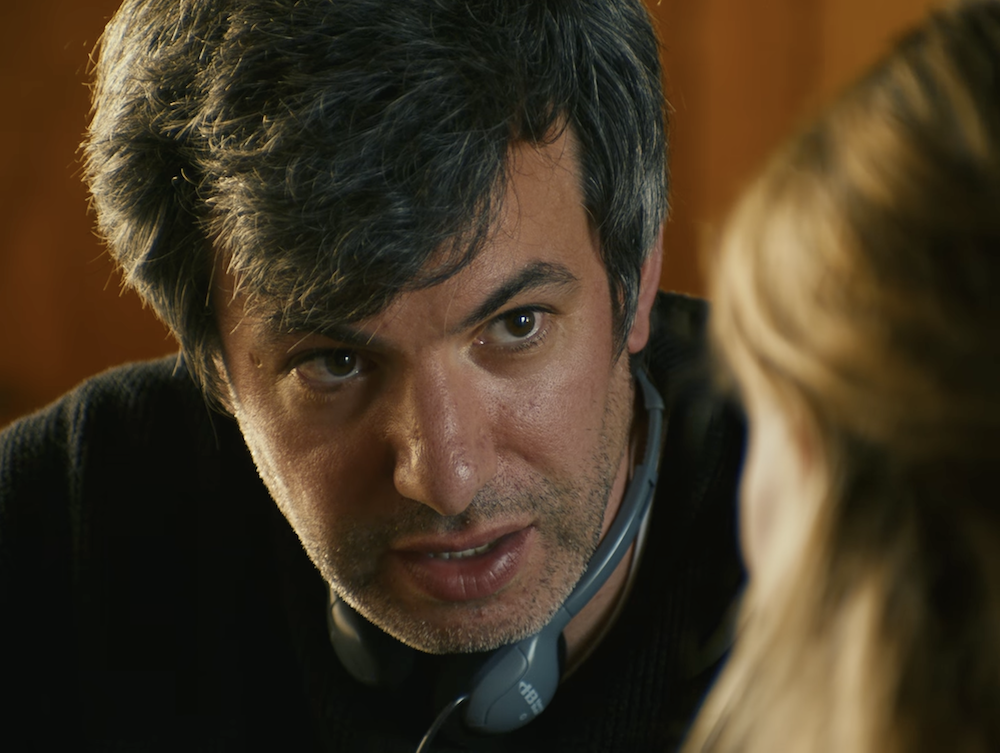
You know Elizabeth Holmes committed fraud. You know Nathan Fielder is manipulating you. Somehow, You Can See Everything still manages to make you doubt everything you’re watching. (A24)
Nathan Fielder and Lance Oppenheim’s fascinating documentary You Can See Everything is now the object of obsession for moviegoers everywhere. It’s a pretty exciting moment, groups of friends racing off to the theater, talking avidly in the parking lot afterward, going home to think about it some more, seeking out more friends with whom to hash it out all over again. If you haven’t seen it and you’re not “in on it” yet, fix that immediately. This doesn’t happen often in our moviegoing world.
The initial source of obsession is the basic wow factor of the film, which is codirectors Fielder and Oppenheim’s assured ability to make you toggle back and forth for hours between two broad assessments of Elizabeth Holmes, the disgraced health tech CEO of Theranos, currently doing time for fraud in a minimum-security Texas prison. In constantly proclaiming her innocence, is Holmes just a cynical, manipulative liar? Or is it actually possible that she is somehow, in some complicated way, an innocent — someone who “thinks differently,” is perhaps neurodivergent, and may be held in a kind of emotional bondage by the men in her life like her current partner Billy Evans and her former boyfriend, Ramesh “Sunny” Balwani, the ex-chief operating officer of Theranos, who are the real baddies in the scenario?
Nobody’s questioning whether fraud was committed, at least not for long — interrogator Fielder starts off making it clear that he doesn’t believe her. Holmes’s Theranos invention was marketed on the claim that it could test a single drop of blood for a huge number of diseases and conditions with maximum efficiency, an incredible claim that was never borne out in practical tests. Yet Theranos took in vast funding dollars from a consortium of old rich guys who were particularly susceptible to Holmes’s baby-faced blonde appeal. But the longer Fielder interviews her, the more he sees her as an enigma, if only because she’s claiming such an inhuman level of transparency in offering up “my truth.” The film’s title is drawn from an offer she makes to him, via text, to come and document the lives of her and her family in the month before she goes to prison: “You can see everything.”