Reckoning With the Failures of Tech Worker Organizing
Two organizers who helped build the tech worker movement ask why its victories proved so difficult to turn into lasting power.
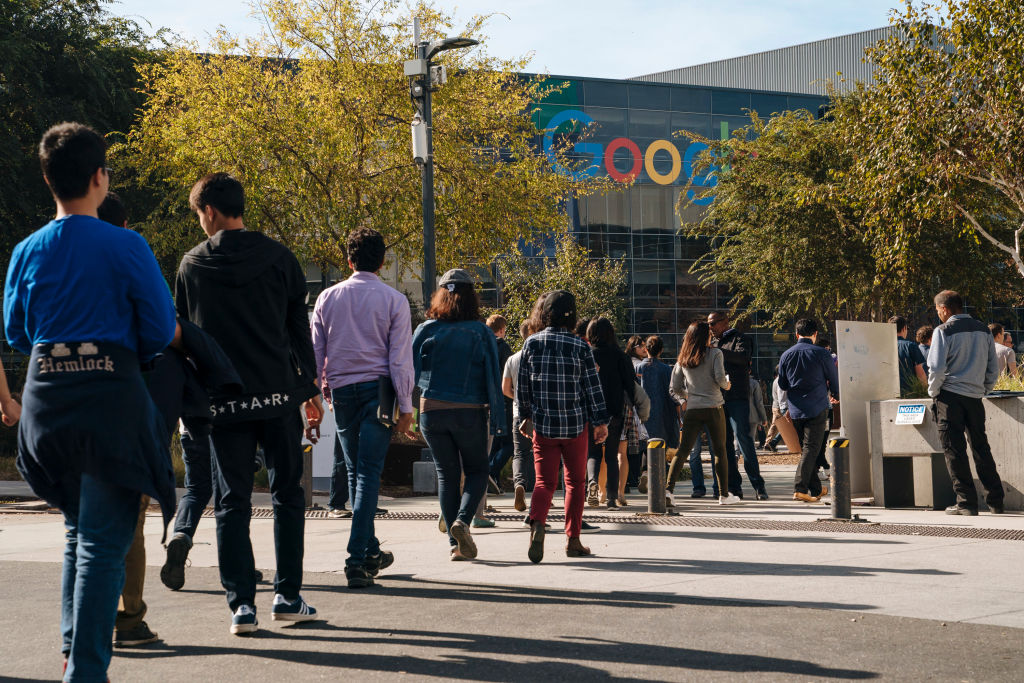
Google employees walk off the job to protest the company's handling of sexual misconduct claims on November 1, 2018, in Mountain View, California. (Mason Trinca / Getty Images)
In early 2022, a group of Twitter employees were quietly trying to unionize the company. They called themselves the “Starlings” after the birds whose synchronized flight patterns offer one another safety and warmth. The workers mapped out their coworkers and assessed their pro- or antiunion sentiments, held one-on-one conversations, and tried to stay off of management’s radar while they built toward a majority.
Then Elon Musk bought Twitter. Half the workforce disappeared in the first round of layoffs, with cuts falling heavily on trust and safety and other teams where the union had organizers. Twitter’s employee directory went offline, and the offices temporarily closed.
Against Tech Oligarchy: Worker Resistance in the World’s Most Powerful Industry, a new book by organizers JS Tan and Clarissa Redwine, begins with the Twitter organizing drive. Redwine, who had helped unionize Kickstarter, joined the Twitter campaign in early 2022; Tan, coming off a successful graduate worker drive at the Massachusetts Institute of Technology, joined a few months later. They were still organizing when Musk took over, suddenly making much of the work they had done impossible to continue.