Goodbye to the Grifters Harry and Meghan
America gave Prince Harry and Meghan Markle streaming deals, sunshine, and an insane amount of money. What it couldn’t give them was a personality independent of the monarchy.
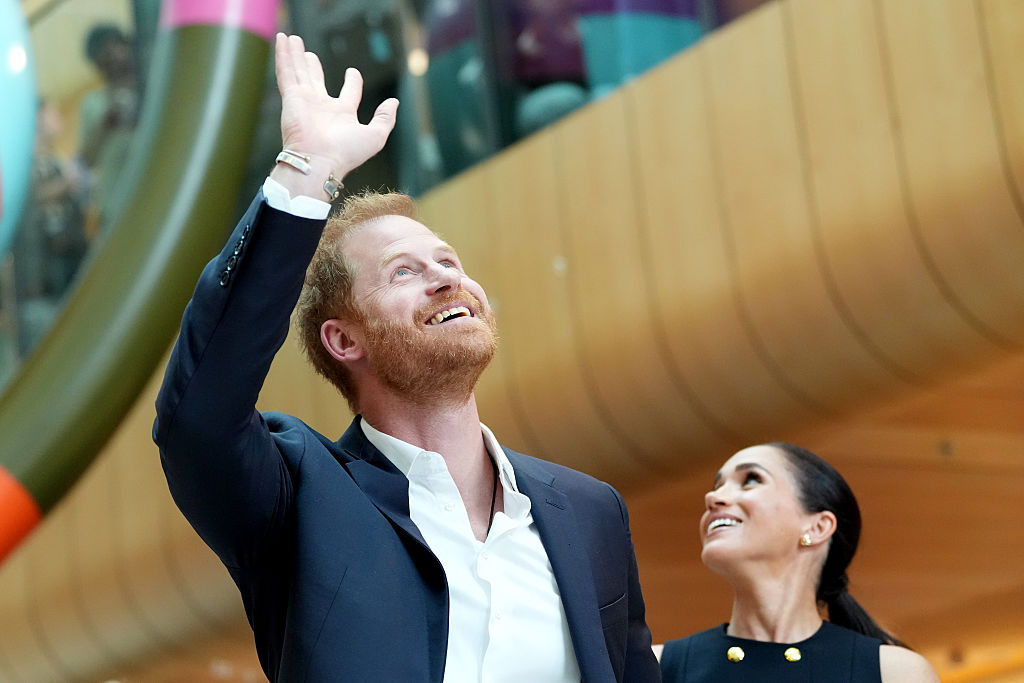
The problem with Harry and Meghan was never that they left the monarchy. It’s that an industry with $120 million to spend decided a prince and a duchess were the most interesting thing it could buy. (Asanka Ratnayake / Getty Images)
Six years after “Megxit,” Prince Harry and Meghan Markle are reversing course — at least partially. The Duke and Duchess of Sussex will reportedly return to Britain later this month for an extended stay, settling with their children Archie and Lilibet in a private residence outside London while the children attend British schools. They will retain their mansion in Montecito as well as a holiday home in Portugal, and remain nonworking royals, which sounds like a contradiction, but alas. No official explanation has been offered for this spectacular U-turn, but perhaps the prodigal son eventually tires of eating among the swine, or, in Harry’s case, of producing polo documentaries that no one watches.
Regardless, let me say on behalf of the rest of America: Goodbye and good riddance. We thankfully still have little use for royals, as the No Kings rallies have proved about our gold-plated pretend emperor holding court in the White House. Plus, there’s very little to miss. Harry’s retreat to the UK is not exactly Odysseus returning to Ithaca, older and wiser, ready to reclaim his place on the throne. He didn’t battle witches or outwit gods or even, really, suffer in California in any way ordinary people would recognize as suffering. The fallen prince has only a diminished Netflix deal and several hours of unlistenable audio, and the only army that conclusively routed him was Spotify’s podcast division.
And Montecito is far from war-torn Troy; it’s California’s wine-dipped coastal retreat for the rich and famous, which The New York Times has described as “pale, pricey, gently geriatric” (translation: white, rich, and old). There, in 2020, Harry and Meghan purchased a sprawling $14 million mansion (now valued at $29 million) that made their historic Frogmore Cottage in England look like a royal-themed Airbnb.
To be fair, Harry and Meghan aren’t Henry VIII–level villains, and their original alibi for Megxit in 2020 was understandable on some basic human level: Buckingham Palace was cold and inflexible; the British tabloid press’s Eye of Sauron relentlessly kept tabs on Harry’s family’s every move; and who doesn’t want to marry for love? The problem is that Harry and Meghan did more than leave an unhappy situation to escape the confines of a decrepit institution. They built a grand theory of themselves, a vision in which the Crown was an unbearable weight, and royal life was the only force preventing their authentic, brilliant selves from flowering. Freed from these things, they would prove that they could be American meritocrats and reveal what they actually had to say. But in the end, what they had to say, it turned out, was mostly that being Harry and Meghan was very hard.
Noblesse Oblige for the Streaming Age
Their career plan followed a familiar route pioneered by the Clintons, the Obamas, and other political celebrities who decided that wielding power was merely a prelude to producing content about the responsible use of power. Every former president, first lady, prince, and duchess now seems to believe he or she has an inner Oprah Winfrey. They no longer wish to be merely influential; they must become influencers, teaching the rest of us about leadership, resilience, and, of course, empathy. It’s noblesse oblige for the streaming TV age.
The Sussexes entered this racket at its most decadent moment. Netflix reportedly offered them a deal worth as much as $100 million. Spotify reportedly signed them for $20 million. Archewell Productions promised documentaries, scripted television, children’s programming, and inspirational audio. Harry and Meghan would become the new king and queen of liberal infotainment.
What Six Years Produced
Look at what six years of “finding their voice” actually produced. With Love, Meghan, the lifestyle show meant to relaunch the Duchess as an American Martha Stewart for the girlboss set, didn’t crack the platform’s top three hundred shows in its debut year, and its hyper-staged jam-making and floral arranging were mocked across every timeline it aired near. They were producers of the documentary Cookie Queens, about the empowerment of young girls becoming Thin Mint entrepreneurs, which opened in theaters earlier this month to $328,000 across 446 screens.
They produced only one genuine hit: Harry & Meghan, Netflix’s 2022 documentary about their relationship with the royal family. It set a record for a Netflix documentary debut. It was also six hours of palace gossip, family recriminations, and therapeutic jargon — an Instagram story stretched to Homeric length. Nothing else approached its success, except for Harry’s memoir Spare, for the obvious reason that nothing else contained the royal family. The animated children’s series Pearl was canceled. Harry’s Polo failed to enter Netflix’s global top ten. The second season of With Love, Meghan failed to crack the platform’s top thousand in the second half. And the streaming giant pulled its backing from Meghan’s As Ever lifestyle brand — though you can still buy her $32 small jars of honey.
Likewise, Meghan’s Archetypes podcast produced twelve episodes before Spotify ended its agreement with Archewell, prompting executive Bill Simmons to call the couple “f–king grifters.” Her subsequent podcast, Confessions of a Female Founder, lasted nine episodes and will not return for a second season. Meanwhile, Harry produced nothing original after a year of brainstorming with Spotify — unless you count his reported idea for a nationwide hot chocolate–tasting podcast.
A lot of the content aimed to be earnestly woke, but for people who have stars on the Hollywood Walk of Fame. Meghan’s Archetypes podcast dressed itself up as feminist reckoning while mostly just cataloging the indignities of being extremely rich and extremely famous, a kind of trickle-down celebrity feminism where the revolutionary act is a duchess admitting she, too, has felt underestimated. Harry, for his part, built Spare and a docuseries out of grievance, however clumsily: furious about racist tabloid coverage in one breath, while coolly recounting that he had killed twenty-five Taliban fighters — men he described as chess pieces removed from the board — in the next.
Too many of their subsequent projects have been a flailing attempt to manufacture a second act out of nothing but self-regard, and audiences, unlike royal correspondents, are under no obligation to keep pretending it’s compelling.
The Dragon Was the Story
Harry has portrayed his battles with the British press as a quest to slay dragons. Meghan once compared him to Super Mario of all figures, the man who “slayed the dragon” and “saved the princess.” But the Sussexes’ Californian adventure suggests that the dragon was also the most interesting thing about them. Once Harry had rescued his princess from the palace, neither seemed to know what the rest of the story was supposed to be.
Do not feel sorry for them. America offered them what it offers every aristocrat, politician, and reality star: the opportunity to reinvent themselves as content. It gave them streaming contracts, celebrity friends, acres of California sunshine, and more money than most producers could dream of. What it could not give them was a personality independent of the Crown.
So welcome home, Harry and Meghan. Britain can have them. But spare us the heroic framing: Odysseus spent ten years trying to reach home; Harry just spent six trying to monetize why he left his.