In Hawaii, Uber Is Creating a Tax Shelter for Itself

Ridesharing behemoth Uber has quietly amassed billions of dollars in a Hawaii-based shell company, ostensibly reserved for insurance liability. This “reserve” could be used to sidestep taxes and fund Uber’s robotaxi projects.
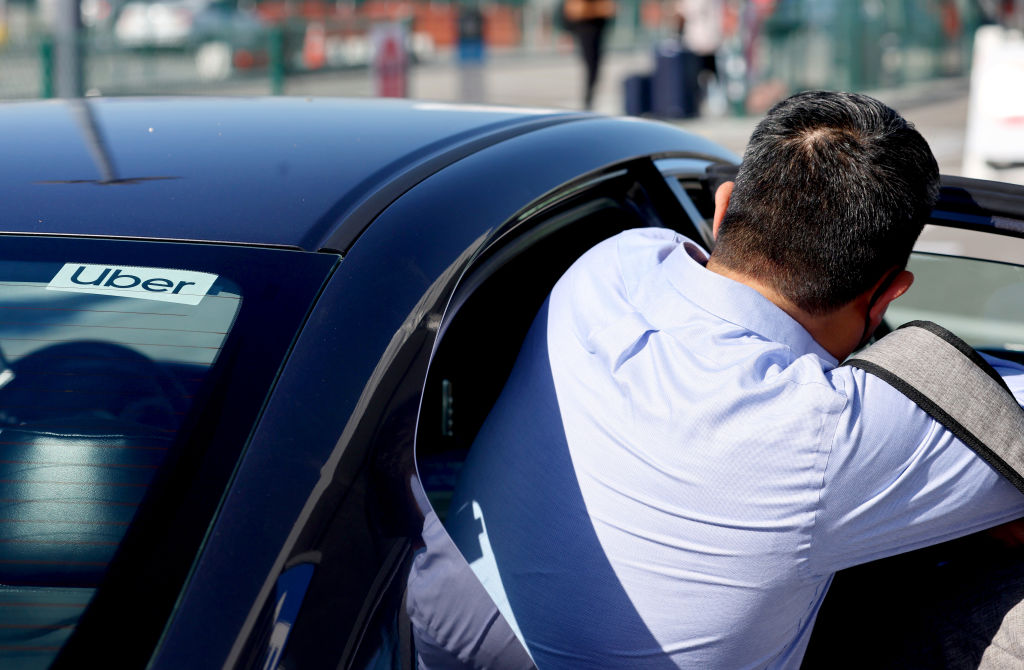
A man gets into an Uber.

Uber has launched a nationwide lobbying campaign to overhaul how car accident victims can sue the company. Last year, the company’s executive bonuses were contingent upon the success of rolling back these consumer protections. (Mario Tama / Getty Images)


Uber, the popular ride-hailing app, has amassed billions of dollars in an alleged dark money slush fund that the company could use not only to fund its robotaxi programs but also to sidestep taxes, according to a new report shared with the Lever.

This comes as Uber has launched a nationwide lobbying campaign to overhaul how car accident victims can sue the company and donated at least $1 million to California gubernatorial candidate Xavier Becerra.

According to 2026 financial filings, last year, Uber’s executive bonuses and other compensation were contingent upon the success of rolling back these consumer protections. For example, former Vice President Kamala Harris’s brother-in-law, Tony West, Uber’s chief legal officer, received a cash bonus for helping pass “bills in Georgia aimed at limiting damages in lawsuits and reducing insurance premiums, and the passage of SB 371 in California, a landmark compromise that lowers excessive government-mandated insurance costs.” The California bill lowered mandatory insurance coverage for Uber from a $1 million blanket coverage for uninsured and underinsured drivers to just $60,000 per person and $300,000 per accident.

The new report from consumer advocacy group Consumer Watchdog details how the rideshare giant has quietly amassed $12.5 billion in a company-owned insurance reserve, called Aleka Insurance, based in Hawaii. The board of directors and executive committee of Uber’s Hawaiian insurance company consists entirely of current and former Uber executives.

According to the report, Uber’s self-insurance reserves could be funneled toward its multibillion-dollar robotic expansion by pulling it from the insurance company and investing the funds in its robotaxi programs. The insurance funds are also not taxed, since they are set aside as a liability for the company rather than counted as profit. This could allow Uber to use the insurance company as a de facto “tax shelter” by pulling funds out of the insurance company during years “when Uber made a big investment and would have less profit to tax,” according to Consumer Watchdog.

In a statement to the Lever, Uber said its operations are aboveboard.

“Consumer Watchdog is presenting speculation about highly technical insurance accounting concepts as settled fact,” a company spokesperson wrote in an email. “The report represents an inaccurate analysis of our insurance reserves and the role of [Aleka Insurance], and any suggestion that we misrepresented facts surrounding the same is categorically false.”

Uber has sunk a reported $10 billion into self-driving car investments, pitching itself as “uniquely positioned to help autonomous developers deploy and scale their technology globally.” Robotaxis, beset by safety and regulatory concerns, are crucial for Uber’s financial future. The company stated in its annual report that “if we fail to offer autonomous vehicle technologies . . . our financial performance and prospects would be adversely impacted.”

Uber’s annual report also explicitly states that any legislation requiring deeper background checks for its drivers or reclassifying drivers as company employees (which could grant workers benefits and broader protections) would be detrimental to its bottom line. Uber is also concerned about its drivers unionizing.

“If a significant number of Drivers were to become unionized and collective bargaining agreement terms were to deviate significantly from our business model, our business, financial condition, operating results, and cash flows could be materially adversely affected,” the company stated in its annual report.

Uber has framed its nationwide campaign to roll back insurance requirements and overhaul tort reforms as a necessary step to counter overbearing lawsuits. However, this framing is missing from its legally required financial filings to its shareholders.

“The irony is that while Uber claims it was driven to the ballot box and legislature by unscrupulous billboard attorneys and frivolous lawsuits that are driving up its insurance rates, there is no mention in its annual report of this being the source of increasing insurance expenses,” Consumer Watchdog noted in its report.