European Democracy Is Eroding
Watchdogs identified a deterioration of democratic space in Italy, Germany, and France last year. Using so-called emergency security measures, the EU’s leading states are squashing the right to dissent.
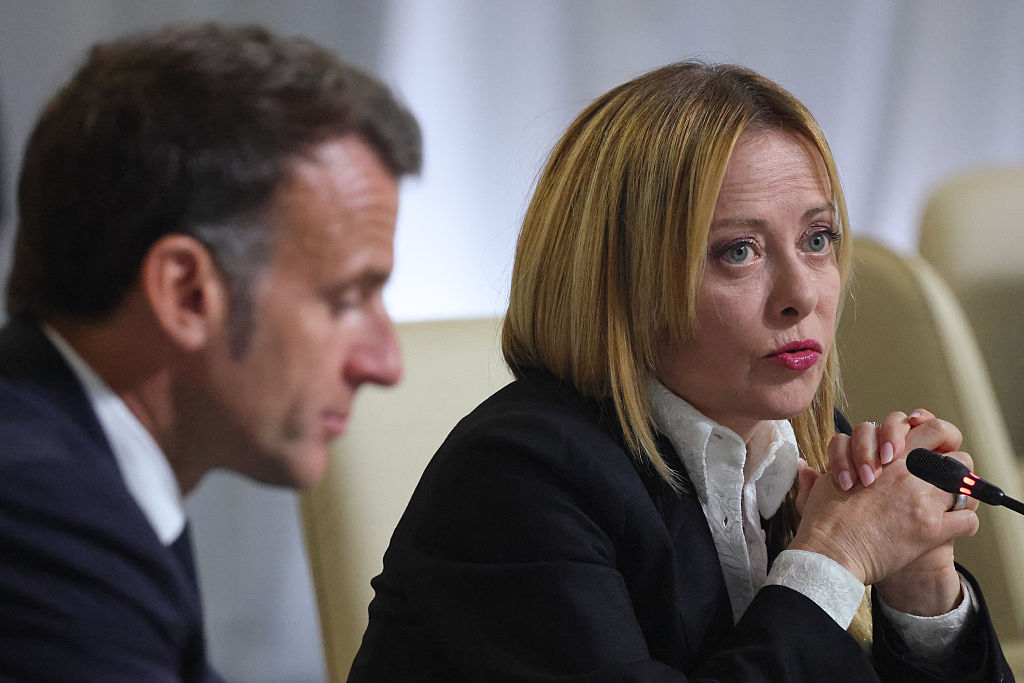
Today’s EU is pursuing a nakedly pro-corporate agenda and squashing those who dissent. (Ludovic Marin / AFP via Getty Images)
Last summer, Giorgia Meloni’s Italian government approved a so-called “anti-Gandhi law,” which criminalizes even nonviolent protests and passive resistance. The highly controversial “Security Decree” was recently followed by a further one, introducing measures such as preventive detention during public gatherings and signaling a shift toward police-state measures. Civil society organizations warn that these “security packages” constitute “one of the most serious attacks on the right to protest in recent republican history.”
When Hungary was still governed by Viktor Orbán, it presented itself as a champion of illiberalism. Yet it was not an outlier. By the end of last year, it had been joined by Italy, Germany, and France in what watchdogs call a common deterioration of civic space. This trans-European trend coincides with efforts to prevent civil society organizations from participating actively in the EU’s political life.
This downward spiral is bound up with a political turn. For this exclusion of civil society from decision-making processes goes hand in hand with pro-corporate politics at the expense of the vulnerable, while reducing once-inalienable rights to privileges that belong only to a few. My recent report “Shrinking Civic Space in the European Union” identifies key political tactics and narrative strategies that have been deployed to scale up attacks on civil society around the EU.