The Devil Wears Prada 2 Hits the Right Bleak Notes
At this point, the Devil Wears Prada franchise is a major cultural phenomenon. And The Devil Wears Prada 2 is a worthy addition, with more than a dash of topicality in its treatment of some of the bleaker aspects of contemporary existence.
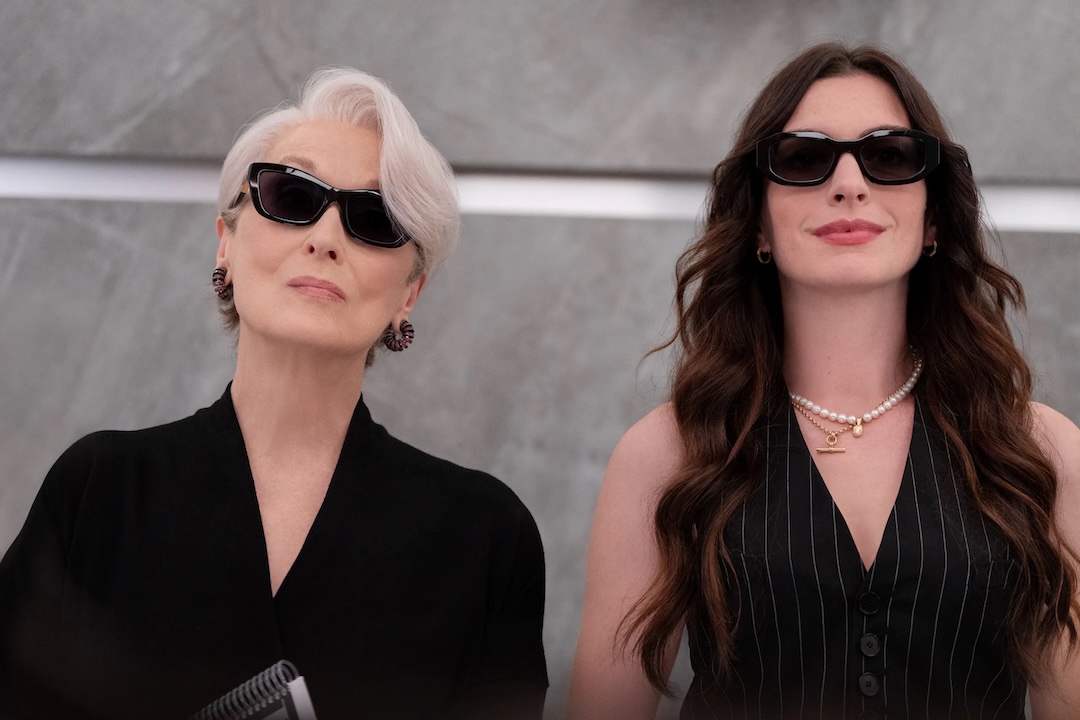
Meryl Streep and Anne Hathaway in The Devil Wears Prada 2. (20th Century Studios)
The Devil Wears Prada 2 strutted to the top of the box office in the first days of its theatrical run — a surprise to no one who saw the first Devil Wears Prada twenty years ago, then watched its popularity grow over the decades from a brisk, lively comedy fave affectionately skewering the fashion industry to a kind of classic status as people viewed it over and over again, delighting in its characters and committing its best lines to memory.
Not all people though. The films — which can now be called a franchise — are firmly “geared toward women” in general descriptions, and the sequel has been drawing women as 75 percent of its audience. The sequel is a long-awaited one and had been hotly anticipated. During the March and April run-up to the May 1 opening, streaming numbers for the first Devil Wears Prada went up 8 percent.
I’ve personally explained to five different straight men — all deeply invested in movies in general and all blankly unaware of The Devil Wears Prada 2 as the major filmgoing event this month — that it might be worth a moment of their attention. They might even consider watching The Devil Wears Prada 1 or 2 or both. The sequel has made a bit of film exhibition history in a modest way, after all: