Palestine 36 Reclaims a Buried Anti‑Colonial Revolt
Annemarie Jacir’s Palestine 36 resurrects the mass anti‑colonial revolt that Britain crushed with overwhelming force — and shows how its legacy still shapes the present.
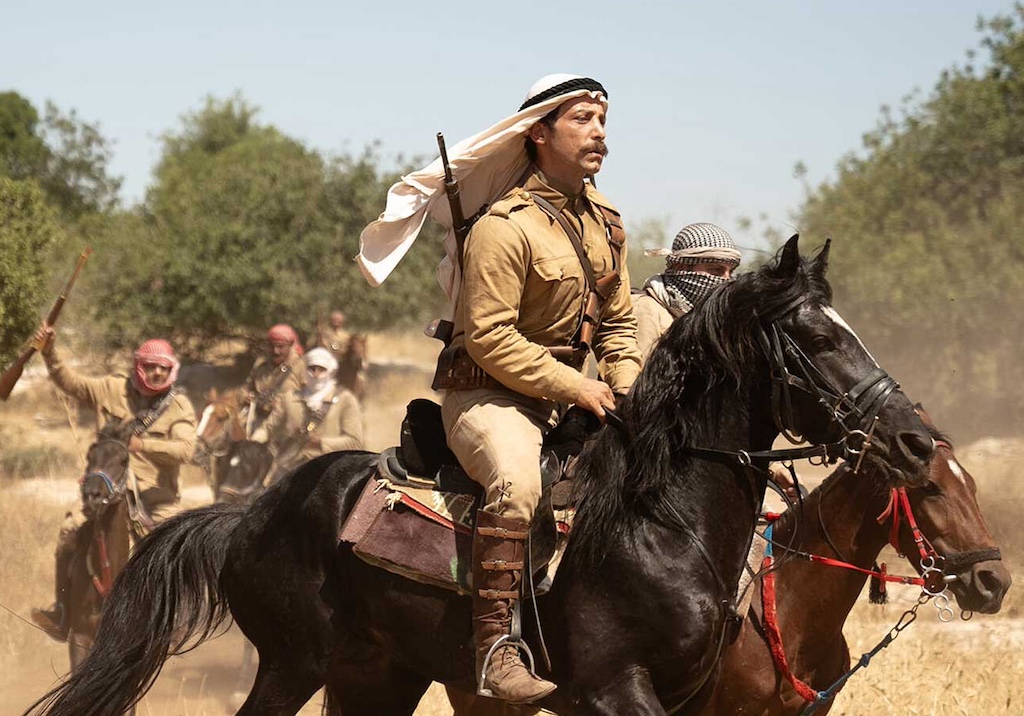
Still from Palestine 36. (Watermelon Pictures)
Bethlehem-born writer-director Annemarie Jacir is at the cutting edge of a new generation of Palestinian filmmakers breaking through to Western audiences and beyond with undeniably powerful movies. Jacir’s 2008 Salt of this Sea received two nominations at the Cannes Film Festival, while her 2012 Palestinian refugee drama, When I Saw You, costarring Saleh Bakri, won an award at the Berlin International Film Festival. Now, her latest feature, Palestine 36 — which also costars Bakri as well as Academy Award winner Jeremy Irons — is having the national release Jacir’s epic richly deserves.
As its title suggests, Palestine 36 — which was Palestine’s official selection for Best International Feature at the Academy Awards and winner of the Tokyo International Film Festival’s Best Film Award — fictionalizes a key period in the ongoing Palestinian liberation struggle. According to Rashid Khalidi’s The Hundred Years’ War on Palestine, by 1939, the British military dispatched “a hundred thousand troops in Palestine, one for every four adult Palestinian men. . . . It took the full might of the British Empire, which could only be unleashed when more troops became available after the Munich Agreement in 1938 . . . to extinguish the Palestinian uprising.”
In this candid conversation, Jacir lays out the historical context and framework within which she dramatizes the mass uprising that began when Yasser Arafat was only seven years old — a revolt that shook the mightiest military in Europe. Jacir was interviewed for Jacobin by film historian and critic Ed Rampell.